
Johanna Beach camping, Great Otway: what to know before you book
Johanna Beach camping in Great Otway National Park: facilities, no showers, no fires, surf safety, plovers, closures and how to prepare.
Open The campground page lists no closures. The Great Otway park page lists Wye Road closed until further notice and several seasonal tracks closed after the January flash flood; Johanna Beach is not mentioned. Checked on the operator's alerts page .
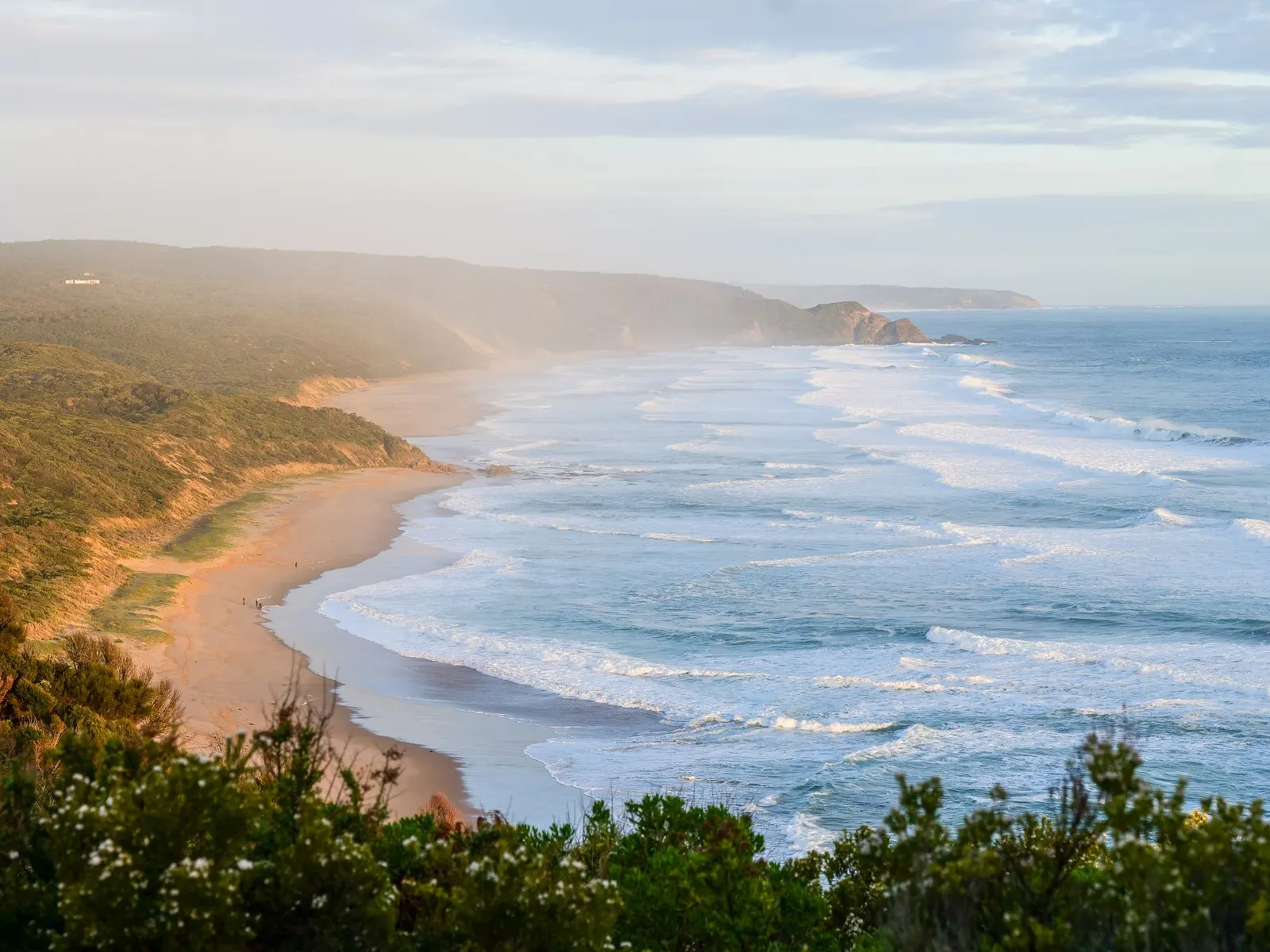
Johanna Beach camping on the Great Ocean Road means one thing: a basic, booked-ahead campground behind the dunes of one of the most exposed surf beaches on Victoria’s Otway coast. Johanna Beach Campground sits behind the dunes of one of the most exposed surf beaches on Victoria’s Otway coast. It is a simple drive-in site with no showers and no fires.
What Johanna Beach is
The campground is in Great Otway National Park, just off the Great Ocean Road near the locality of Glenaire. It lies behind coastal dunes and open grassland, with the beach a short walk away. The Great Ocean Road Coast and Parks Authority runs the campground, and Parks Victoria says bookings for its sites are made directly on the authority’s website.
Johanna Beach itself is a long, wide, west-facing stretch of sand. The operator describes it as a well-known surf beach, more exposed than much of the coast, and it is unpatrolled.
How do you get to Johanna Beach Campground?
Allow about three hours from Melbourne via the inland route through Colac, or about four hours if you follow the coast road, according to the operator. Lavers Hill, on the Great Ocean Road, is roughly 48 kilometres from Apollo Bay.
From the Great Ocean Road, a gravel road leads down to the beach area. One 4WD guide refers to two dirt routes to the beach, known as Red Johanna and Blue Johanna, with the Blue route having more sealed surface. The operator’s accessibility notes mention a gravel service road and a short compacted gravel path to the toilets, and parking is generally on the grass beside your site. After rain, check the park page before taking a low vehicle or long trailer.
What is the camp like, and can you camp on Johanna Beach?
The operator lists 25 unpowered sites, each for up to six people, suited to tents, camper trailers and caravans. Sites sit on open grass with some shelter from coastal vegetation, but the operator also warns that wind protection is limited. Listed site sizes range from roughly 5 by 4 metres to 11 by 8 metres, and one site is listed at around 10 by 13 metres, so large rigs should check individual site pages before booking.
The ground is undulating, no designated paths link sites to toilets, and the beach is not wheelchair accessible from the camp. The toilet block has standard cubicles and a unisex accessible toilet, all non-flush.
The operator describes a campground behind the dunes with 25 bookable sites, so camping means a booked site there, not a spot on the sand. It suits self-sufficient campers who are comfortable with basic amenities and a bit of wind. It is a poor match if you need showers, powered sites or a campfire.
RequiredBooking
Non-flushToilets
NoneShowers
Not permittedCampfires
What is there to do near Johanna Beach?
On the beach. Walking the sand is the main activity. Surfers and surf fishers use the beach, though the exposed conditions favour experienced people. Between July and September, humpback and southern right whales can be seen offshore, according to the operator.
Further afield. The operator’s navigation lists nearby attractions including Melba Gully, Kalimna Falls, the Cumberland River Trail, Sheoak Falls, Teddy’s Lookout and the Surf Coast Walk. The operator does not give distances from the campground, so check each before planning a day. Lavers Hill is described as about half an hour from the Twelve Apostles and the Otway Fly. The wider park also has Triplet Falls, Hopetoun Falls and the Kennett River glow-worm walk, in other sections. Several walks listed on the operator’s site were marked temporarily closed when checked, including Phantom Falls and Erskine Falls, so confirm status first.
When is the best time to camp at Johanna Beach?
The campground page gives no general season, so confirm opening and conditions with the operator. Bureau of Meteorology figures reproduced for Apollo Bay show a mild climate: mean maximums around 22 degrees in January and February, falling to about 13 degrees in July, with overnight lows near 7 degrees in July. Rainfall peaks in winter, with August the wettest month at about 128 millimetres, and February the driest at around 50 millimetres.
For the summer peak 2026/27, the operator sets a seven-night minimum for weekly blocks starting 19 December 2026 through to 16 January 2027, and a three-night minimum from 23 to 26 January 2027, with a 14-night maximum. The park advises choosing weekdays to avoid crowds and public holidays.
Flood closures are a real possibility. Parks Victoria posted a flood-closure notice for the eastern part of Great Otway National Park after storms on 16 January 2026 and said the list was not exhaustive. When the operator’s campground page was checked for this guide, it listed no closure for Johanna Beach, and the park page noted that Wye Road was closed for storm and flood repairs. Conditions change at short notice, so check the park page immediately before you leave.
Season by season at Johanna Beach
The figures below are Apollo Bay’s, taken from the Bureau of Meteorology data reproduced on Wikipedia. Apollo Bay is on the eastern side of Cape Otway, so Johanna Beach will differ, and its more exposed position means wind matters more than the numbers suggest.
| Season | Apollo Bay mean max | Apollo Bay mean min | Rainfall per month | At the beach |
|---|---|---|---|---|
| Summer (Dec to Feb) | 20.6 to 21.9 C | 12.2 to 14.6 C | 50 to 64 mm | Peak booking weeks with minimum stays; plovers nesting |
| Autumn (Mar to May) | 15.7 to 20.1 C | 9.5 to 12.8 C | 68 to 100 mm | Quieter outside holidays; check closures after storms |
| Winter (Jun to Aug) | 13.1 to 14.0 C | 7.3 to 8.3 C | 109 to 128 mm | Wettest months; whales offshore July to September |
| Spring (Sep to Nov) | 15.8 to 19.2 C | 8.9 to 10.6 C | 80 to 110 mm | Plovers nesting until February |
One night or a weekend: two simple plans
One night. Pack the vehicle with water, a gas stove and rubbish bags, and plan to arrive with daylight left to pitch on exposed grass. Walk the beach once, staying below the high tide line, then cook on your stove and turn in. The next morning, drive on to Lavers Hill for a coffee or a look at the Twelve Apostles, which the Lavers Hill page puts about half an hour away.
A weekend. Use the extra day for something inland. Melba Gully and Kalimna Falls are on the operator’s list of nearby attractions, and the Cumberland River Trail and Teddy’s Lookout are too. The operator does not give distances, so check each one against the day’s conditions and any posted closures before you go. Between July and September, keep binoculars handy for whales.
Who this camp suits, and who should choose elsewhere
Johanna Beach suits campers who value space, a wild coastline and a quiet night, and who are comfortable with no showers, no fires and limited shelter. It also suits surf watchers and surf fishers who already know exposed beaches.
Choose another camp if you want a fire, a more sheltered site or a different feel. The operator’s other drive-in campgrounds include Aire River East and West, Blanket Bay, Parker Hill, Allenvale and Jamieson Creek. Jamieson Creek has shared fireplaces (not on Total Fire Ban days) and 2WD access, though you bring your own firewood. Families wanting facilities such as hot showers should check the operator’s full camping list before committing.
Nature and history notes
The park sits within an Aboriginal cultural landscape, and Parks Victoria recognises the Traditional Owners’ ongoing role in caring for Country. Hooded Plovers are small shorebirds with a black hood and white collar. They scrape a shallow nest in sand or gravel above the high-water mark, lay one to three eggs and take about 30 days to hatch them, according to Wikipedia. Disturbance by people and dogs is listed as one cause of decline in eastern Australia. Nearby Lavers Hill was named after two Gippsland settlers, Stephen and Frank Laver, and logging and farming were early industries there.
Common mistakes
- Arriving without a booking. The operator says bookings are essential and must be made before arrival.
- Expecting a campfire. Solid-fuel fires are not permitted.
- Treating the beach like a patrolled one. It is unpatrolled and exposed.
- Walking close to cliff edges or bases. The cliffs can be unstable.
- Skipping the closure check. Flood notices followed storms in January 2026, and several nearby walks were marked temporarily closed.
- Setting up in plover nesting areas between August and February.
Planning checklist
- Confirm your dates on the booking system, including the summer peak minimum stays.
- Check the park page for closures and the fire danger rating the day before.
- Fill water containers; none is provided.
- Pack a stove, windproof shelter and spare gas.
- Plan your supplies in Lavers Hill or Apollo Bay before arriving.
- Decide on nearby walks and confirm they are open.
- Pack out all rubbish.
Is it safe? Rules, fire, swimming and wildlife
- Fire. Solid-fuel fires are not permitted. Use a fuel stove or gas barbecue. The area is bushfire-prone, so check the weather and fire danger rating before travelling.
- Generators. Not allowed.
- Water. Bring all your drinking water. The camp does not supply it.
- Rubbish. Carry it out with you. One listing says there are no bins.
- Surf. The beach is unpatrolled and the surf is rough. Cliffs in the area can be unstable, so keep clear of their edges and bases.
- Snakes. Take care in grass and dunes.
- Hooded Plovers. The threatened birds nest just above the high tide line on this beach from August to February. Eggs and chicks are hard to see, so stay below the high tide mark and keep to designated areas. Earlier Parks Victoria information says dogs must be on a lead, but the Great Otway park page says dogs are generally not allowed in national parks (assistance dogs are welcome), and the campground page does not mention pets. Confirm with the operator before bringing a dog.
- Bird flu. Do not touch sick or dead wildlife. Record what you see and report it on the Emergency Animal Disease Hotline, 1800 675 888.
What to bring
- All drinking water, plus extra for washing up
- A gas stove or fuel stove, since fires are out
- Strong tent pegs, guy ropes and a wind-rated shelter for open, exposed grass
- Rubbish bags that seal, because you carry everything out
- Warm and waterproof layers, even in summer, given the coastal wind
- A spare gas bottle
- Binoculars if you hope to spot whales in season
- Offline maps, since this guide did not verify mobile coverage
Supplies and services nearby
Stock up before you arrive. Lavers Hill has a roadhouse, a tavern, a police station and a post office, and sits where roads to Colac, Cobden, Apollo Bay and Port Campbell meet. Apollo Bay is the larger centre on the Great Ocean Road, about 43 kilometres from Lorne according to Wikipedia. Opening hours, fuel and supermarket details were not confirmed for either town, so check ahead.
Which other Great Otway camps are alternatives?
The operator lists seven drive-in campgrounds in Great Otway National Park: Allenvale, Jamieson Creek, Blanket Bay, Parker Hill, Aire River East, Aire River West and Johanna Beach. Blanket Bay shares Johanna’s seven-night summer-peak minimum. Jamieson Creek, near Separation Creek, has 24 unpowered sites, shared fireplaces and 2WD access, so it suits campers who want a fire, though it is farther east along the coast.
More from the operator: greatoceanroadauthority.vic.gov.au/Land-We-Manage/National-Parks/Great-Otway-National-Park/Drive-in-campgrounds/Johanna-Beach-Campground.
Plan it in the app
Save the camp on your route in MotoRidez and the planner shows road closures along the way, and where your tank runs out once you have entered the range of your vehicle. Save the route for offline use before you lose signal: it saves the corridor around your route, not a whole region.
Details come from the operator’s own records and pages, read on 20 October 2026, and change. We do not show prices or availability. Confirm fees, bookings, closures and fire rules with the operator before you go.
Questions riders ask
Can you camp on Johanna Beach?
The operator describes a campground behind the dunes with 25 unpowered sites, and bookings are essential before arrival. Camping is at those booked sites, and the operator asks visitors to stay in designated areas because Hooded Plovers nest on the beach from August to February.
Is it safe to swim at Johanna Beach?
The operator says the beach is unpatrolled and more exposed than other parts of the coast, and lists rough surf as a hazard. It is described as popular with experienced surfers, so check conditions and the operator's advice before entering the water.
Does Johanna Beach Campground have showers?
No. The campground has non-flush toilets and no showers listed, so bring your own drinking water.
Do you need to book Johanna Beach Campground?
Yes. Bookings are essential and must be made before arrival. Summer peak 2026/27 has minimum stays in weekly blocks, so check the booking rules for your dates.
Can you have a campfire at Johanna Beach?
No. Solid-fuel fires and generators are not permitted. The operator recommends fuel stoves or gas barbecues.
How far is Johanna Beach from Melbourne?
The operator gives about three hours via the inland route through Colac, or about four hours via the Great Ocean Road.
Are dogs allowed at Johanna Beach Campground?
The Great Otway park page says dogs are generally not allowed in national parks, with assistance dogs welcome. Earlier Parks Victoria information asked for dogs on a lead, so confirm with the operator before bringing one.
Free, no subscription
Plan the curvy bits. Record the ride.
Watch your
map fill in.
Curvy routing, turn-by-turn voice navigation, ride recording and your ridden-roads map, with nothing behind a paywall.



Join the waitlist
Bring MotoRidez to your roads
The more riders register from your region, the sooner we get there. Put your name down, then send it to your ride group to move your region up the queue.
You're on the list ✓
Nice — you're in the queue
Every rider you bring moves your region up the list. Share it with your mates and your ride groups.