
Bakers Point camping, Narawntapu: sites, water, fires and booking
Bakers Point camping in Narawntapu National Park: unpowered sites, water, fire rules, no dogs or generators, booking and the parks pass explained.
Open, campfire ban The Parks and Wildlife Service says seasonal campfire bans on reserved land started at 2:00 am on 26 October 2026 and list Narawntapu National Park. A temporary visitor centre is operating while the original is rebuilt. Checked on the operator's alerts page .
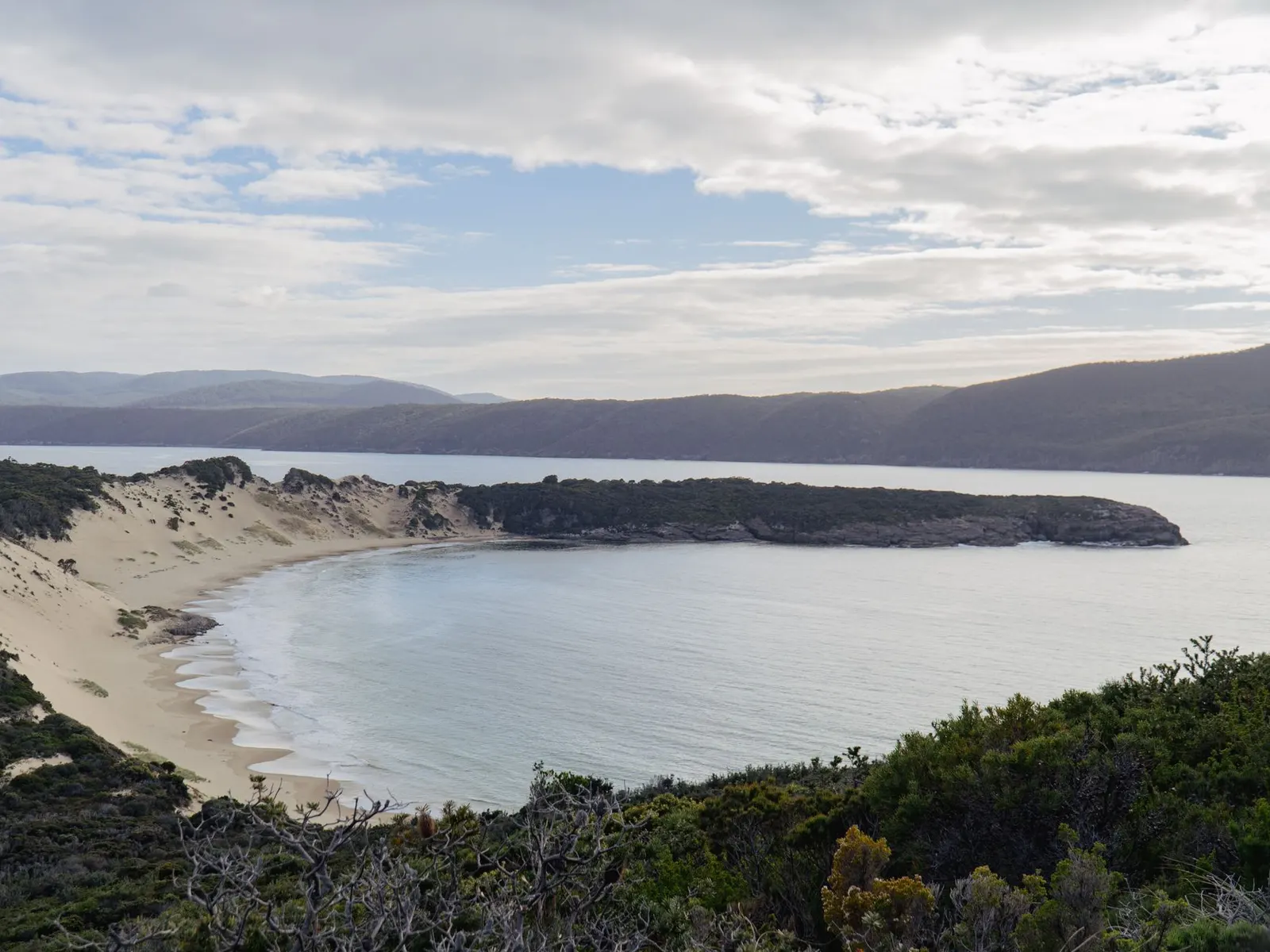
Bakers Point campground is one of four campgrounds in Narawntapu National Park on Tasmania’s central north coast. It is an unpowered campground for tents and caravans, with toilets, a picnic area and a blackwater dump point. The campground and Bakers Beach are both covered by the park’s rules and alerts, set out below. This guide covers what the Parks and Wildlife Service Tasmania (PWS) says about the site, how to reach it, what is and is not provided, and what to sort out before you leave home. It is written for any camper, whatever you arrive in.
Where is Bakers Point campground?
Narawntapu National Park sits on the central north coast of Tasmania. PWS lists four campgrounds in the park: Springlawn, Bakers Point, Koybaa and The Horse Yards. Bakers Point is set up for both caravans and tents. The sites are unpowered, and each site takes a maximum of six people.
The PWS camping page does not give a site count for Bakers Point, and it does not list a season, so there is no stated opening or closing date to plan around. The page does say that seasonal restrictions may apply, mostly in the form of campfire bans, covered below. If you need the number of sites or want to check for any change, check the Parks and Wildlife Service page.
How do you get there?
PWS describes the main access as the B71, about 30 minutes east of Devonport and the ferry terminal. You can also come from the south, north of Westbury on the B72, or along the Tamar Highway (A7) and turn left at Exeter onto the B71. Watch for the turnoff to Bakers Beach Road (C740) and follow it into the park.
The camping page does not describe the surface or width of Bakers Beach Road beyond its name, so check the Parks and Wildlife Service page before you tow anything. PWS also advises avoiding driving in reserves at night where possible, because native animals use the roads and the park roads are not the place to be rushing after dark. Plan to arrive in daylight. The park’s main road access runs through country where native animals may be on the road, so keep your speed down on the approach as well as inside the park.
What are the sites like?
Bakers Point is described as unpowered and suitable for caravans and camping. There are accessible campsites, which is worth knowing if anyone in your group has limited mobility. A picnic area with unsheltered tables is provided, so there is no shelter from the weather at the tables. Bring your own shade or a tarp if you want one.
The page does not give site sizes, whether sites are marked or whether you choose your own, and it does not describe the ground. If any of that matters for your set-up, such as a long trailer or a large awning, check the Parks and Wildlife Service page or ask at the visitor centre.
UnpoweredSites
YesToilets
Springlawn onlyShowers
Untreated, boilWater
What facilities are provided, and what is not?
The facilities listed at Bakers Point are toilets, an accessible camping option, a picnic area with unsheltered tables, and a blackwater dump point for caravans and motorhomes. PWS says hybrid chemical and septic toilets are used at all of the park’s campgrounds.
What is not listed matters as much. There are no showers listed at Bakers Point: the PWS page says showers are only at Springlawn. There is no mention of power, a shop or rubbish collection at Bakers Point, and the page asks you to take all your rubbish away with you. Treat the campground as a self-sufficient site and carry what you need in and out.
What about water?
Water is available from tanks and bores in the park, including at Bakers Point. PWS is clear that the water is untreated and should be boiled for several minutes before drinking. It also says to bring your own drinking water and a container to carry it in.
The same page notes there is no permanent fresh water source along the park’s walking tracks and no drinking water at Badger Beach or West Head. If you plan a day walk from camp, fill your own bottles before you leave.
Can you have a campfire?
Campfires are permitted at Bakers Point only in the designated fireplaces. You need to bring your own pre-cut firewood, or buy it from the visitor centre. Campfires are prohibited during seasonal fire bans.
As of the page’s last review, seasonal campfire bans on reserved land in Tasmania started at 2:00 am on 26 October 2026. The alert lists Narawntapu National Park among the affected areas. That means that at the date of writing, 3 November 2026, you should plan on cooking on a camp stove rather than a fire. PWS recommends carrying a portable fuel stove anyway, because restrictions can change. It also publishes a campfire map showing the rules for each campground, so check that map before you go.
If fires are allowed when you visit, the rules are simple: never leave a fire unattended, and put it out fully before you leave. PWS’s wording is to soak it, stir it and soak it again.
What are the rules on dogs, generators and wildlife?
Dogs are not permitted in the national park. Generators are not permitted either. Both rules apply to the whole park, not just one campground, so plan accordingly if you usually travel with either.
The PWS camping page does not set out specific rules for wombats, Tasmanian devils or other animals at the campground, beyond general advice to watch for animals on the roads and to respect native plants and animals. Keep to that: drive slowly, avoid night driving, and keep your rubbish and food secure and out of the park with you.
What should you know about the beach?
Bakers Beach is popular for swimming and fishing, but neither is patrolled, and ocean conditions can vary. PWS also warns that significant sections of beach are restricted at high tide and during large swells, so check the tides and coastal conditions before you walk any distance along the sand.
A separate section near the Bakers Point boat ramp is reserved for watercraft, and swimming is not allowed there. Keep clear of it if you are in the water.
How do you book, and what do you need?
PWS says to book online at book.parks.tas.gov.au, and booking terms and conditions apply. The maximum stay listed for the park’s campgrounds is 14 days. If you arrive after hours, you can self-register at the Springlawn Visitor Centre or at West Head, and cash is required for that.
A valid parks pass is required for entry to Tasmania’s national parks. Passes are available online at passes.parks.tas.gov.au, and you can also pay for a parks pass and camping at the Springlawn Visitor Centre. This guide does not quote fees, because the figures change; check the Parks and Wildlife Service page for current costs.
What is the current visitor centre situation?
PWS has posted a planned-event alert, last reviewed on 30 October 2026, saying a temporary visitor centre is operating at Narawntapu. The original visitor centre is under construction. Visitors are asked to follow the signs to the temporary site for parks passes, campground access and park information, so do not assume the building you remember is the one to head for.
The standard visitor centre hours listed are 9am to 4pm from December to April and 9.30am to 3.30pm from April to December, with dates varying around school holidays. The centre closes each day from 12.30pm to 1pm. Because of the construction work, check the Parks and Wildlife Service page for the temporary centre’s hours before you rely on them.
Is there anything else affecting access soon?
PWS lists a statewide planned event: Targa Tasmania, from 18 to 22 November 2026. The alert says public roads across Tasmania will be closed to facilitate the road rally event, which may affect access to some national parks and reserves. If your trip falls in that window, check the Parks and Wildlife Service page and plan your route ahead.
What about walks from camp?
The PWS camping page mentions the park’s walking tracks only in passing, to say there is no permanent fresh water source along them and no drinking water at Badger Beach or West Head. This guide does not describe individual routes. Check the Parks and Wildlife Service page for the walk you have in mind, carry all the water you need, and check tide times before you head along the beach.
A practical checklist before you leave
- Book online and keep the confirmation with you.
- Hold a valid Tasmanian parks pass before you reach the park.
- Pack a fuel stove, because campfires are banned at the moment and restrictions can change.
- Bring drinking water and a container, or the means to boil tank or bore water for several minutes.
- Leave dogs and generators at home.
- Plan to arrive and leave in daylight.
- Check tide times before walking the beach.
- Carry out all your rubbish.
- Bring cash in case you need to self-register after hours.
Bakers Point is a plain, practical beach campground, and the way to enjoy it is to be organised in advance: confirm the booking, know the fire status and bring your own water arrangements. Once that is done, the beach, the walking tracks and the quiet coast are all within reach of your site.
More from the operator: parks.tas.gov.au/explore-our-parks/narawntapu-national-park/narawntapu-camping.
Plan it in the app
Save the camp on your route in MotoRidez and the planner shows road closures along the way, and where your tank runs out once you have entered the range of your vehicle. Save the route for offline use before you lose signal: it saves the corridor around your route, not a whole region.
Details come from the operator’s own records and pages, read on 20 October 2026, and change. We do not show prices or availability. Confirm fees, bookings, closures and fire rules with the operator before you go.
Questions riders ask
Can you camp at Bakers Point in Narawntapu?
Yes. Bakers Point is an unpowered campground for caravans and tents, with a maximum of six people per site. Book online through the Parks and Wildlife Service.
Are there showers at Bakers Point?
None are listed at Bakers Point. The Parks and Wildlife Service page says showers are only at Springlawn.
Is the water safe to drink?
It is untreated tank and bore water. The Parks and Wildlife Service says to boil it for several minutes, and to bring your own drinking water and a container.
Can you have a campfire at Bakers Point?
Only in the designated fireplaces, and not during seasonal fire bans. Bans on reserved land started on 26 October 2026 and list Narawntapu, so carry a fuel stove and check the campfire map.
Are dogs or generators allowed?
No. Dogs and generators are both not permitted in Narawntapu National Park.
Do you need a parks pass?
Yes, a valid Tasmanian parks pass is required for entry to national parks. Check the Parks and Wildlife Service page for how to get one and for fees.
How long can you stay?
The maximum stay listed for the park's campgrounds is 14 days. Check the Parks and Wildlife Service page for any change.
Free, no subscription
Plan the curvy bits. Record the ride.
Watch your
map fill in.
Curvy routing, turn-by-turn voice navigation, ride recording and your ridden-roads map, with nothing behind a paywall.



Join the waitlist
Bring MotoRidez to your roads
The more riders register from your region, the sooner we get there. Put your name down, then send it to your ride group to move your region up the queue.
You're on the list ✓
Nice — you're in the queue
Every rider you bring moves your region up the list. Share it with your mates and your ride groups.