
Tōtaranui camping, Abel Tasman: booking, road and what to expect
Tōtaranui camping in Abel Tasman National Park: DOC booking, the 12 km unsealed road, rules, dogs, best time and what to bring.
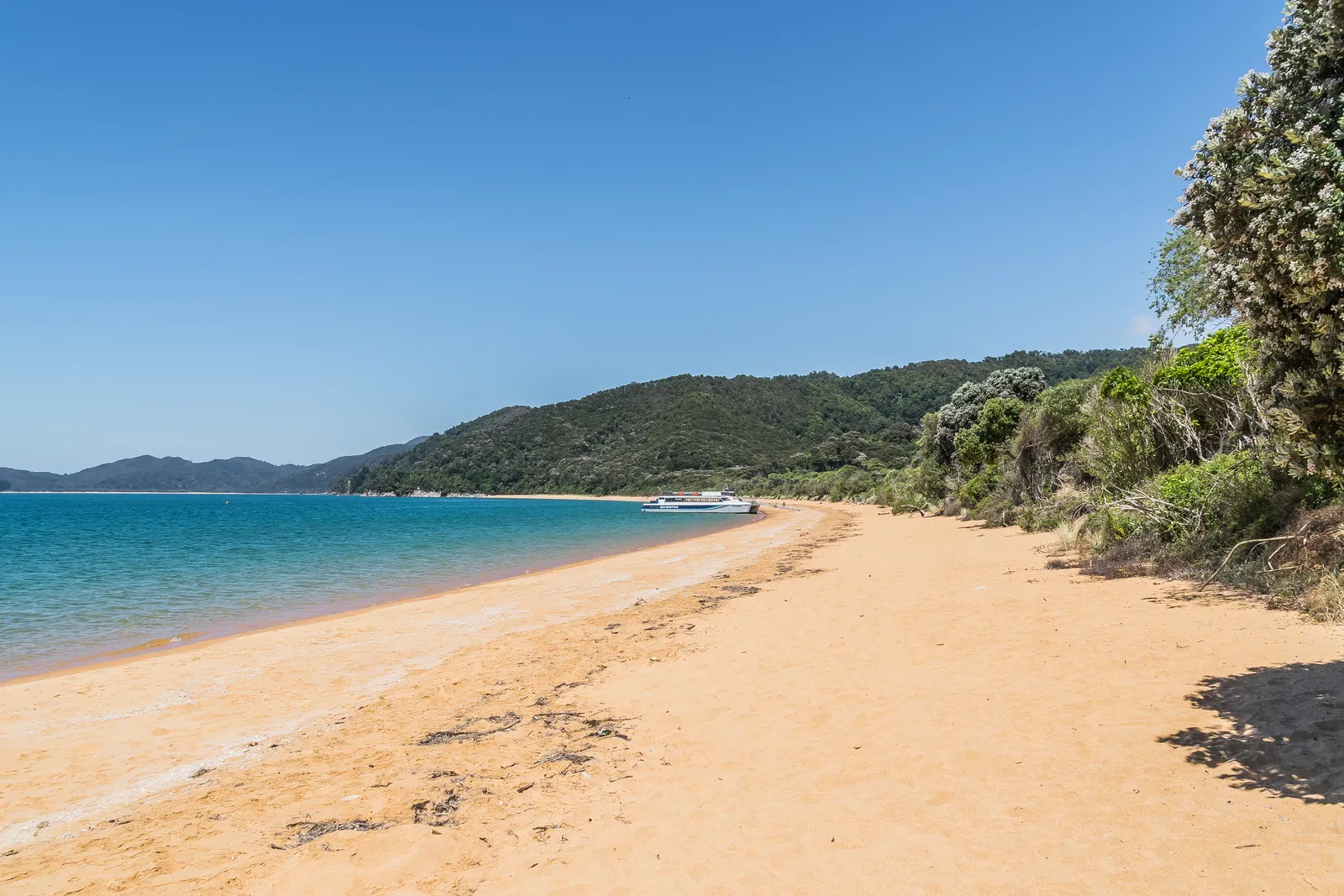
Tōtaranui camping, in the northern end of Abel Tasman National Park in the Tasman region, is run by the Department of Conservation (DOC) as one very large campground behind a golden beach and beside an estuary. DOC’s page calls it Tōtaranui Campground and describes a camp for up to 850 people, so the name in this guide matches the operator’s. It is also the northern end of the Abel Tasman Coast Track. This guide covers booking, the road in, the rules and the decisions that matter before you go.
What is Tōtaranui and what is the setting like?
Abel Tasman National Park was opened on 18 December 1942 to mark 300 years since Abel Tasman’s 1642 visit, and Wikipedia lists it as the smallest of New Zealand’s national parks at about 237 square kilometres. It is forested, hilly country on Golden Bay and Tasman Bay. Tōtaranui itself is a beach of roughly one kilometre with a large campsite, and the land was added to the park in 1949.
The camp sits across the camp road from the beach and alongside the estuary. The estuary matters for families: DOC says it is safe for children when the tide is in, so tides shape your swimming plans.
Can you camp at Tōtaranui?
Yes. DOC runs Tōtaranui Campground as a bookable campground. DOC does not state a formal campsite category (such as serviced or standard) on the page, so rely on its own description: a large campground with 23 zones separated by shelter belts and six modern amenities blocks. The page does not describe individual site types, so ask DOC if you need power.
There are two separate camping products here, and mixing them up is the most common error:
- Tōtaranui Campground. Open to everyone who books, whether you arrive by car, camper, bicycle or on foot.
- Tōtaranui Great Walk Campsite. The beachside sites on the beach side of the camp road are for walkers on the Abel Tasman Coast Track only. DOC allows a one night maximum stay there, and longer stays need a Campground booking instead. The DOC Campsite Pass cannot be used at the Great Walk campsite.
Do you need to book Tōtaranui?
Yes, and early. DOC says bookings are made online, that each booking covers one site, and that your actual site is allocated on arrival. Sites are not held for walk-ins. If no availability shows online, the campground is fully booked. DOC’s page showed bookings open up to 30 June 2027 when checked, though you should confirm the current window on the booking page.
Key rules from DOC:
- Book well ahead for 1 December to 28 February and for public holiday weekends.
- You must give full names and ages for group members, with up to six people per booking.
- Same-day online bookings close at 8 pm, if spaces remain.
- Booking by phone or at a visitor centre attracts a service fee, there is a minimum fee per booking and DOC states that refunds are not given.
- The DOC Campsite Pass can be used here only outside 26 December to 8 February. You still book online before occupying a site, and the stay limit is 7 nights in any 30-night period.
- The maximum stay from 26 December to 8 February is 14 nights.
Fees apply and vary by season and traveller type, so check the current figures on DOC’s booking page rather than relying on a guide. A 2024 news report described the booking site struggling when summer bookings opened, so settle your dates early.
How do you get to Tōtaranui?
DOC describes the route from Nelson as about two and a half hours. Take State Highway 6 south from Nelson, join State Highway 60 past Richmond, cross Takaka Hill and reach Takaka. From Takaka, follow signs towards Pohara and Tata Beach, passing the Abel Tasman Memorial. Takaka is about 45 minutes from the camp.
The last 12 kilometres are narrow, winding and unsealed, per DOC. Allow extra time, drive to the conditions, and check for road closures before leaving.
The gates are locked overnight. From 1 October to 31 March they are open 7:30 am to 8:30 pm, and from 1 April to 30 September 7:30 am to 6:30 pm.
You can also skip the road. DOC says a seasonal bus runs to the area, and daily water taxis operate from Kaiteriteri, Marahau and many beaches in the park, which suits walkers, cyclists and anyone who wants to leave the car behind.
What facilities does Tōtaranui have?
DOC lists six amenities blocks spread through the campground. The page does not itemise toilets, showers, drinking water, cooking shelters or power, so treat those details as something to confirm with DOC before you rely on them. It does confirm these services:
- A camp office with staff on site all year. From 1 December to mid-April it is open 8 am to 4 pm, and outside that period you should check the door for hours. Eftpos works during office hours only.
- The office sells rubbish bags, ice, insect repellent, sunscreen, postcards, phone cards and snacks, and it has maps and a pay phone.
- Mobile coverage is unreliable, so download maps and confirm plans before you leave Takaka.
- The Tōtaranui Ngarata Homestead is an education centre that can be booked for private stays when school groups are not using it.
What are the rules at Tōtaranui?
- Fires. Use designated fireplaces only, and only outside fire bans. Bring your own firewood.
- Rubbish. There are no rubbish facilities. Take all rubbish and recycling with you. In peak season staff collect food scraps daily for composting. DOC names a transfer station on Scott Road, off Abel Tasman Drive, about 40 minutes away.
- Dogs. Dogs are not allowed in Abel Tasman National Park, according to DOC and Wikipedia. Wikipedia notes guide dogs as the exception.
- Drones. Flying a drone without a permit is prohibited.
- Generators. DOC’s page does not state a rule, so ask before bringing one.
Is Tōtaranui dog friendly?
No. The park does not allow dogs, so choose another campsite if the dog is coming. DOC links separate rules for other pets on conservation land.
What is there to do near Tōtaranui?
- Beach and estuary. Swim or snorkel at Tōtaranui beach. DOC also mentions kayaking, waterskiing, and sailing out to fish.
- Pukatea Walk. A short walk. DOC gives no time, so ask at the office.
- Headlands Track. A longer walk with views over Tōtaranui.
- Coast walk to Awaroa. Walk south past Goat Bay to Awaroa Lodge, about 2.5 to 3 hours each way on the Abel Tasman Coast Track. The lodge has a cafe and restaurant, open daily in summer, and you can return on foot or by boat.
- Gibbs Hill Track. A 10 kilometre one-way mountain bike ride from Tōtaranui to Wainui, open 1 May to 1 October.
Wikipedia records more than 70 bird species in the park, including petrels, shags, penguins, gulls, terns and herons, along with possums, wild pigs, deer and goats. The larger offshore islands have no introduced mammalian predators.
When is the best time to camp at Tōtaranui?
DOC calls Christmas to mid-February the busiest period, with mid-February to Easter quieter. Winter nights are cold in the climate figures below.
The figures below are from Takaka, the nearest town with a long climate record, about 45 minutes from the camp. The coast itself may differ.
| Season | Months | Mean max | Mean min | What to expect |
|---|---|---|---|---|
| Summer | Dec to Feb | 21.5 to 23.4 C | 10.7 to 11.6 C | Warmest and sunniest; busiest and booked out first |
| Autumn | Mar to May | 16.5 to 21.4 C | 5.4 to 10.0 C | Quieter from mid-February to Easter; cooling nights |
| Winter | Jun to Aug | 13.4 to 14.2 C | 2.4 to 3.3 C | Cold nights; shorter gate hours |
| Spring | Sep to Nov | 15.7 to 19.4 C | 4.7 to 8.2 C | Warming; October is the wettest month on record at Takaka |
Takaka’s annual rainfall is about 2,015 millimetres, with every month receiving well over 100 millimetres on average. Pack for rain in any season.
What should you bring?
- A booking confirmation and full names and ages of everyone in your group.
- Your own firewood if you plan a fire, and a way to take all your rubbish out.
- Insect repellent and sunscreen. The office sells both, but the shop has limited hours.
- Offline maps and a plan for no phone signal.
- Warm layers for the nights, even in summer, and wet-weather gear.
- Cooking gear, since DOC does not itemise a cooking shelter.
- Food for the whole stay. The nearest shops are 25 to 45 minutes away.
What supplies are nearby?
Pohara, about 25 minutes away, has a shop, takeaways and several cafes. Takaka, about 45 minutes away, has a supermarket, petrol stations, an information centre, banks, cafes, restaurants, a museum, galleries and a cinema. Fill the tank in Takaka before the unsealed final stretch, since there is no fuel on site that DOC lists. Wikipedia places Takaka at the south-eastern end of Golden Bay, with State Highway 60 linking it to Motueka.
A one-night plan
Reach Takaka by early afternoon, stock up, then drive the final unsealed section in daylight and check in at the camp office. Walk the beach, and use the estuary at high tide if you have children. Next morning, do the Pukatea Walk before packing out.
A weekend plan
Day one, arrive and settle. Day two, walk the Coast Track south to Awaroa (about 2.5 to 3 hours one way), eat at the lodge cafe and return by boat or on foot. Day three, take the Headlands Track before the drive out.
Who is Tōtaranui for, and who should choose elsewhere?
It suits families, groups, walkers and anyone who wants a big, staffed, beach-front camp with walks from the tent. It suits less well anyone who needs dogs, guaranteed power, a quiet site in peak summer, or who is nervous about a 12 kilometre winding unsealed road. If you are walking the Coast Track for a single night, the Great Walk campsite is the purpose-built option, and if you want a bed and a meal nearby, Awaroa Lodge is the one DOC names. For other campsites, use DOC’s Abel Tasman campsite listings.
Planning checklist
- Confirm the booking window, fees and stay limits on DOC’s booking page.
- Plan arrival before gate closing time.
- Fill the tank and buy food in Takaka.
- Arrange firewood, rubbish bags and a plan to carry rubbish out.
- Leave the dog at home.
- Check road conditions on the final 12 kilometres.
Common mistakes
- Arriving without a booking and expecting walk-in space.
- Booking the Great Walk campsite as a car camper, or expecting more than one night there.
- Relying on phone signal for directions or bookings.
- Arriving after the gates have closed.
- Assuming amenities such as power or a cooking shelter that DOC does not list.
- Bringing a dog.
More from the operator: doc.govt.nz/parks-and-recreation/places-to-go/nelson-tasman/places/abel-tasman-national-park/things-to-do/campsites/totaranui-campground.
Plan it in the app
Save the camp on your route in MotoRidez and the planner shows road closures along the way, and where your tank runs out once you have entered the range of your vehicle. Save the route for offline use before you lose signal: it saves the corridor around your route, not a whole region.
Details come from the operator’s own records and pages, read on 20 October 2026, and change. We do not show prices or availability. Confirm fees, bookings, closures and fire rules with the operator before you go.
Questions riders ask
Can you camp at Tōtaranui?
Yes. DOC runs Tōtaranui Campground as a large bookable campground for up to 850 people. The beachside sites are for Abel Tasman Coast Track walkers only.
Do you need to book Tōtaranui?
Yes. DOC takes bookings online, and if no availability shows the campground is full. Book well ahead for 1 December to 28 February and public holiday weekends.
How much does Tōtaranui camping cost?
Fees apply and vary by season and traveller type. Check the current figures on DOC's booking page.
Does Tōtaranui have showers and toilets?
DOC lists six modern amenities blocks but does not itemise toilets or showers on its page. Confirm details with DOC before you go.
Is Tōtaranui dog friendly?
No. Dogs are not allowed in Abel Tasman National Park, per DOC.
When is the best time to camp at Tōtaranui?
DOC says Christmas to mid-February is busiest and mid-February to Easter is quieter. Late summer gives settled weather with fewer people.
How do you get to Tōtaranui?
Drive from Nelson via SH6 and SH60 over Takaka Hill to Takaka, about 2.5 hours. The last 12 km is narrow, winding and unsealed. Water taxis and a seasonal bus also serve the area.
Free, no subscription
Plan the curvy bits. Record the ride.
Watch your
map fill in.
Curvy routing, turn-by-turn voice navigation, ride recording and your ridden-roads map, with nothing behind a paywall.
Join the waitlist
Bring MotoRidez to your roads
The more riders register from your region, the sooner we get there. Put your name down, then send it to your ride group to move your region up the queue.
You're on the list ✓
Nice — you're in the queue
Every rider you bring moves your region up the list. Share it with your mates and your ride groups.