
Pebbly Beach camping, Murramarang: facilities, booking and rules
Pebbly Beach camping in Murramarang National Park: booking, showers, dogs, fires, the sealed road in and the best time to camp.
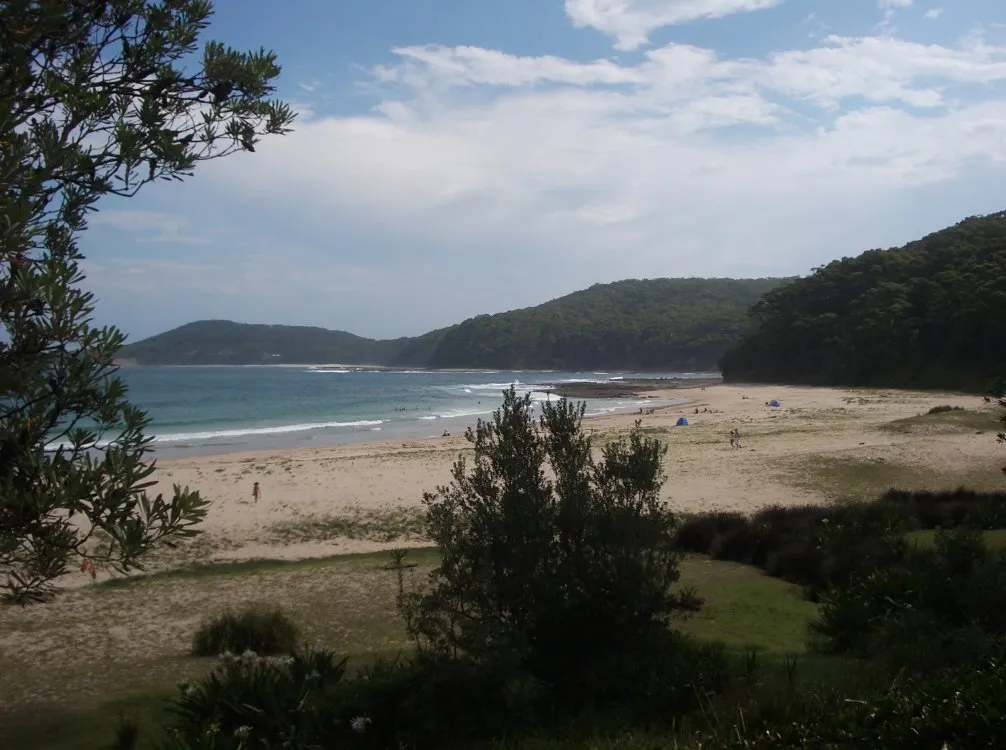
Pebbly Beach camping in Murramarang National Park puts you in a small bush campground on the NSW South Coast, a short walk from a beach where eastern grey kangaroos graze. The park runs along the coast near Batemans Bay and Ulladulla, and the NSW National Parks and Wildlife Service (NPWS) runs the campground. It suits people who want a quiet, unpowered base with flush toilets, cold showers and a beach close by, and who are happy to carry in their own water, food and firewood. This guide covers how to get there, what the sites are like, the rules, the seasons and the alternatives nearby.
What is Pebbly Beach campground?
Pebbly Beach campground has 23 marked, unpowered sites tucked into forest behind the coast, a short walk from the sand. The surrounding park covers about 44 kilometres of coastline, with cliffs, headlands and beaches, and spotted gums growing right down toward the ocean. Murramarang National Park was established on 4 May 1973 and covers roughly 121 square kilometres, running from Long Beach to Merry Beach.
NPWS describes the camp as remote. There is no power and no mobile coverage at Pebbly Beach, so treat it as a place to switch off rather than a place to work from.
Can you camp at Pebbly Beach?
Yes. NPWS lists three ways to camp here: pitching a tent, setting up a camper trailer site, or camping beside your vehicle. Tent sites are gravel platforms next to the parking spot. The listing says each booking allows one vehicle per campsite.
Sites are unpowered. A limited number suit small caravans under 4.57 metres, camper trailers and campervans. Published site sizes run from 3.6 by 3.3 metres to 6 by 4.1 metres for tent sites, and from 5.8 by 5.8 metres to 7.9 by 5.4 metres for the other sites. Measure your rig, including the drawbar, before you book. A large caravan or motorhome is not what this campground is built for.
Chemical toilets are allowed, but you cannot empty them into the NPWS toilets, so plan where you will dump.
Do you need to book Pebbly Beach?
Camping is booked through NPWS. The National Parks Contact Centre takes bookings from 7am to 7pm daily on 1300 072 757, and the park pages link to the online booking system. Check-in is at 12 noon and check-out is at 11am, and a late check-out may attract a fee. Online group bookings cover up to 40 people or 9 sites; larger groups need to send a group booking enquiry.
Check the booking page for availability before you drive down rather than expecting to turn up and find a site. The park can also close at times because of poor weather or fire danger, so look at the campground’s local alerts page in the days before you leave.
How much does Pebbly Beach cost?
Fees apply, and NPWS sets them. Two charges are separate. The campsite fee is paid when you book. A park entry fee is charged per vehicle per day and is not included in your camping fee. Entry is paid at pay machines in the park that take cash and cards, and Pretty Beach takes cards only. Annual passes also exist. Check the current amounts on the NPWS campground and park pages, because fees change.
How do you get to Pebbly Beach?
The park sits about 206 kilometres south-west of Sydney by road, and the park’s own page lists Batemans Bay at about 11 kilometres, Ulladulla at 33 kilometres and Mollymook at 35 kilometres. The recommended route leaves the Princes Highway at East Lynne and follows Mt Agony Road, which is sealed all the way. Take the second right just before the dirt road starts, wind down the hill and turn left into the campground.
NPWS rates the route as suitable for 2WD vehicles and lists access as all-weather. Pebbly Beach Road also meets the Princes Highway but it is unsealed, so use it only if you are comfortable on gravel. The Murramarang entry points each use a different approach, so do not follow a navigation app to Pretty Beach or Depot Beach by mistake.
Because there is no mobile coverage, download your directions and the NSW National Parks app maps before you leave the highway.
Does Pebbly Beach have showers and toilets?
Yes. The campground has flush toilets and cold showers, plus rubbish bins and a carpark. There is no power. Water is not potable, so boil or treat it before drinking and bring your own drinking water. The toilets and the beach viewing platform are wheelchair accessible, although NPWS rates overall disability access as medium and says assistance may be required to reach the area.
Is Pebbly Beach dog friendly?
No. Pets and domestic animals are not permitted in Murramarang National Park, apart from certified assistance animals. If a dog is travelling with you, choose a campground outside the national park.
Are campfires and generators allowed?
Generators are not permitted. Amplified music is not allowed either.
Wood barbecues are provided on tent-only sites but not on the other sites. Firewood has to be brought in, and you can also bring your own fire pit or brazier. The Depot Beach campground sells firewood, ice and swap-and-go gas. Fire rules change with conditions: the NSW Rural Fire Service can declare total fire bans, and the park may close for fire danger. During a park fire ban, wood and solid-fuel stoves are normally prohibited, so carry a gas stove as a backup and read the current fire notices before you light anything. Smoking is prohibited throughout NSW national parks.
NPWS lists no maximum stay length on the campground page. Rubbish bins are provided, but carrying out what you bring in is the safest habit in a place with this much wildlife.
What wildlife will you see at Pebbly Beach?
The campground has resident kangaroos, and the grassy foreshore behind the beach is where eastern grey kangaroos graze. King parrots are seen at Pebbly Beach, and the wider park has abundant birdlife, with raptors such as peregrine falcons and sea eagles. Goannas live in the area. In winter, lyrebirds perform courtship displays in the park’s rainforest areas.
The kangaroos are wild animals. NPWS gives no feeding or handling advice on the campground page, so keep your distance, keep food out of reach and secure your rubbish. Use a torch when you walk to the toilets in the dark.
When is the best time to camp at Pebbly Beach?
NPWS says the park is attractive all year, with spotted gums shading the warmer months. Summer waters are clear for swimming and snorkelling, birdwatching is good in winter, and the Pretty Beach to Durras Mountain walk is recommended in spring. March is the wettest month and August the driest.
The table uses Bureau of Meteorology figures for nearby Batemans Bay as quoted on Wikipedia, so Pebbly Beach itself may differ slightly.
| Season | Mean daily range | What to expect |
|---|---|---|
| Summer (Dec to Feb) | 14 to 26 degrees | Warm, humid, swimming weather, with the highest fire danger |
| Autumn (Mar to May) | 7 to 25 degrees | Mild, March is wettest |
| Winter (Jun to Aug) | 4 to 18 degrees | Cool nights, birdwatching, August driest |
| Spring (Sep to Nov) | 7 to 23 degrees | Mild, good for walking |
Extremes happen. The park lists a summer record high of 43.3 degrees, so check fire danger in the hottest months.
What is there to do near Pebbly Beach?
Walks start from the campground, and NPWS lists 24 walking options in the area. Named tracks in the park include Pebbly Beach to Durras Mountain, Pretty Beach to Snapper Point, the Depot Beach Rainforest walk and Rock Platform walk, the Durras Lake Discovery trail, which suits children, and the three-day Murramarang South Coast Walk between Ulladulla and Batemans Bay. Durras Mountain has a steep track.
The park also offers swimming, fishing, snorkelling and scuba, surfing, and paddling or walking around Durras Lake. Fishing needs a NSW recreational fishing licence, and spearfishing is allowed only in designated areas. In the north, the Murramarang Aboriginal Area holds the largest midden on the south coast, which reflects the great cultural significance of the park to Aboriginal people.
Beaches here are not patrolled and can have strong rip currents. The safest place to swim is between the red and yellow flags at a patrolled beach, which you can find through Beachsafe.
What should you bring to Pebbly Beach?
- Drinking water, or a way to treat the tank water
- All your food, because the nearest shops are not close
- Firewood, a fire pit or brazier, and a gas stove for fire-ban days
- A torch, warm layers, and a download of offline maps
- A printout or screenshot of your booking
- Emergency Plus on your phone, since mobile reception is limited and you need it for Triple Zero (000)
Where are the nearest supplies?
Depot Beach campground sells ice, firewood and swap-and-go gas. Petrol stations with general stores are on the highway about 12 kilometres away. For a full shop, Batemans Bay has Bridge Plaza, anchored by Woolworths, and Village Centre Batemans Bay, anchored by Coles, Aldi and Kmart. Moruya Airport is about 30 kilometres south of Batemans Bay.
A one-night plan and a weekend plan
For one night, arrive after the noon check-in, set up, then walk to the beach in the late afternoon when kangaroos are likely to be grazing. Cook on a gas stove or tent-site barbecue, listen for evening birdsong, and be packed before the 11am check-out.
For a weekend, spend the first full day on a walk from the campground, such as Pebbly Beach to Durras Mountain if you want a climb. Use the second morning for a swim or snorkel where conditions allow, then drive to Batemans Bay for supplies on the way home.
Who should choose somewhere else?
Choose another site if you are bringing a dog, a generator, a large caravan or you need power or hot showers. Murramarang has other campgrounds: Depot Beach, Pretty Beach, North Head and Oaky Beach, and the NRMA Murramarang Beachfront Holiday Resort is listed within the park. Each has its own rules, so check the NPWS page before you book. If you want a roof, Pebbly Beach shacks are two-bedroom cabins for up to six guests.
Planning checklist and common mistakes
Before you go:
- Confirm your booking, check-in and check-out times, and the current alerts
- Read the fire rules and pack a gas stove
- Download maps and directions
- Pack drinking water and all your food
- Leave pets and generators at home
Common mistakes:
- Arriving without a booking
- Forgetting that park entry is charged separately from camping
- Relying on mobile coverage for navigation
- Assuming the tank water is safe to drink
- Swimming at an unpatrolled beach in rips
More from the operator: nationalparks.nsw.gov.au/camping-and-accommodation/campgrounds/pebbly-beach-campground-murramarang-national-park.
Plan it in the app
Save the camp on your route in MotoRidez and the planner shows road closures along the way, and where your tank runs out once you have entered the range of your vehicle. Save the route for offline use before you lose signal: it saves the corridor around your route, not a whole region.
Details come from the operator’s own records and pages, read on 20 October 2026, and change. We do not show prices or availability. Confirm fees, bookings, closures and fire rules with the operator before you go.
Questions riders ask
Can you camp at Pebbly Beach in Murramarang National Park?
Yes. NPWS runs a 23-site campground with tent, camper trailer and beside-your-vehicle sites, a short walk from the beach.
Do you need to book Pebbly Beach campground?
Camping is booked through NPWS online or on 1300 072 757. Check availability before you drive, and check current alerts for closures.
How much does Pebbly Beach camping cost?
Fees vary. The camping fee and a separate per-vehicle park entry fee both apply, so check the current amounts on the NPWS campground page.
Does Pebbly Beach have showers and toilets?
Yes, flush toilets and cold showers. There is no power, and the water is not drinkable until boiled or treated.
Is Pebbly Beach dog friendly?
No. Pets are not permitted in Murramarang National Park, apart from certified assistance animals.
When is the best time to camp at Pebbly Beach?
NPWS calls the park attractive all year. Summer suits swimming, winter suits birdwatching, and March is the wettest month.
How do you get to Pebbly Beach campground?
Take the Princes Highway to East Lynne and turn into Mt Agony Road, which is sealed all the way. NPWS lists the route as suitable for 2WD.
Free, no subscription
Plan the curvy bits. Record the ride.
Watch your
map fill in.
Curvy routing, turn-by-turn voice navigation, ride recording and your ridden-roads map, with nothing behind a paywall.



Join the waitlist
Bring MotoRidez to your roads
The more riders register from your region, the sooner we get there. Put your name down, then send it to your ride group to move your region up the queue.
You're on the list ✓
Nice — you're in the queue
Every rider you bring moves your region up the list. Share it with your mates and your ride groups.