
Dundubara camping, K'gari: buy your permits before the barge, not on the island
Dundubara camping on K'gari (Fraser Island): permits, 4WD and tide rules, hot showers, fire rings, dingo safety, no dogs or generators.
Open; check the alerts Queensland Parks lists the Tukkee Wurroo (Indian Head) walking track as temporarily closed to 18 November 2026, a marine stinger warning from 1 November 2026 to 31 May 2027 and a drive-with-care alert for turtle nesting from 1 November 2026 to 1 May 2027. Beach camping zone 9 is closed. The K'gari conditions report was updated on 20 October 2026. Checked on the operator's alerts page .
 Open; check the alerts
Map: Dundubara and what is around it
Pan and zoom. Solid lines are sealed roads, dashed brown lines are gravel and unsealed roads, and purple lines are named twisty roads. Tap a pin or a road for details, and use the buttons to switch layers on and off.
The interactive map needs WebGL, which this browser does not offer. The places around the camp are listed below.
Fuel
- Cathedral Beach 6.4 km in a straight line
- Happy Valley Fuel 20.8 km in a straight line
- Orchid Beach Fuel 22.9 km in a straight line
Other camps nearby
- Guruman Campground 2.2 km
- Wyuna Campground 5.5 km
- Cathedral Beach 6.5 km
- Dingos 6.5 km
- Burad Campground 8.9 km
- K'Gari Camping Area 9.7 km
Distances are in a straight line from the camp, not by road. Places and roads come from OpenStreetMap and can be out of date: confirm fuel and opening hours before you rely on them. An unsealed road on the map is not necessarily open to vehicles, and in national parks many are fire trails, so check the park alerts and signs. Map data © OpenStreetMap contributors.
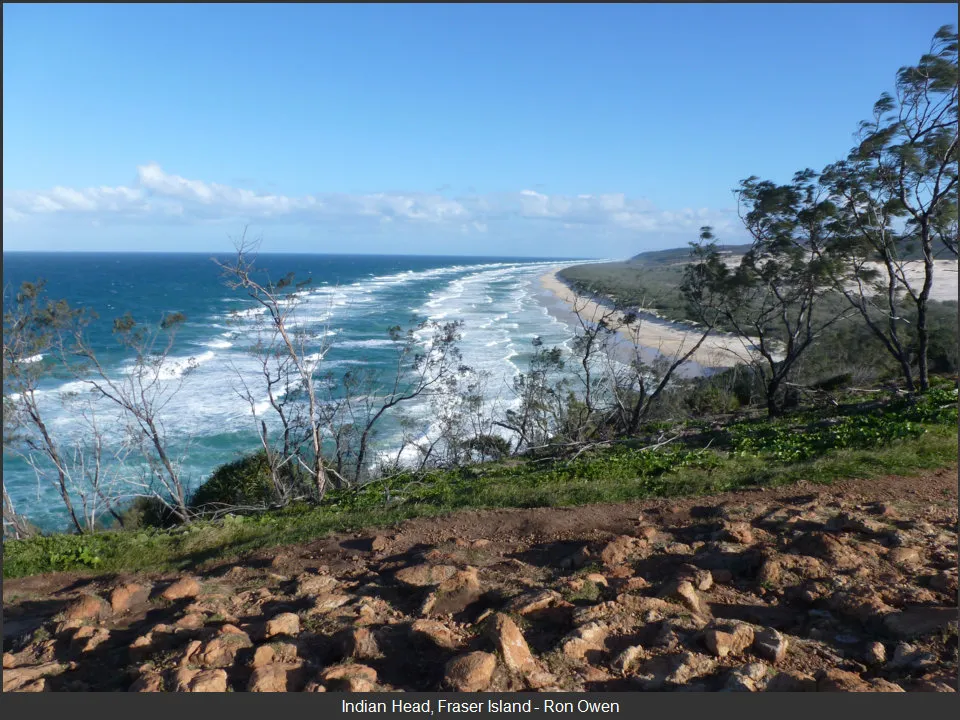
Dundubara camping on K’gari (Fraser Island) puts you in a large fenced camping area tucked behind the dunes on the central east coast of the world’s largest sand island. The area sits in coastal forest, roughly 75 kilometres north of the Hook Point barge landing and 19 kilometres south of Indian Head, and it is run by Queensland Parks and Wildlife Service (QPWS). This guide covers what the operator says about permits, access, facilities, dingo rules and timing, and it flags the few details that you should confirm before you commit.
What is Dundubara camping area on K’gari?
Queensland Parks describes Dundubara as a large, formal, fenced camping area with a variety of sites, set back behind the dunes in coastal forest and close to walks and other attractions. It is on K’gari, 15 kilometres off the Hervey Bay coast and about 300 kilometres north of Brisbane, on the Eastern Beach scenic drive 41.4 kilometres north of Eurong and 26.9 kilometres south of Waddy Point beachfront camping area. The park pages split the listing into a tent site and a trailer site, so you may see “Dundubara (tent site)” and “Dundubara (trailer site)” while the booking page uses “Dundubara camping area” and places it in the K’gari (Fraser Island) Recreation Area.
The island around it is large. K’gari is about 123 kilometres long and 22 kilometres wide, roughly 250 kilometres north of Brisbane, and was World Heritage listed in 1992. Its sand has built up over about 750,000 years, dunes can reach 244 metres, and it holds more than 100 freshwater lakes.
Can you camp at Dundubara?
Yes, but only with a QPWS camping permit bought before you set up. Fees apply. Queensland Parks states that permits cannot be purchased from rangers on the island, so arriving without one is not an option.
Vehicles need a separate vehicle access permit. Queensland Parks tells you to buy all your permits before you go, to make sure the number plate on the permit is correct, and to be ready to show a digital or printed copy if an officer asks. That matters for borrowed, hired or recently purchased vehicles. Vehicles that stay within the Kingfisher Bay Resort and Village boundary are the stated exception.
Do you need to book Dundubara?
Yes. Camping permits are required for QPWS camping areas, and school holidays and other peak periods fill up. Queensland Parks says camping bookings can be made up to 12 months in advance and strongly advises booking early for school and public holidays.
High-clearance 4WDAccess
RequiredBooking
YesFlush toilets
Yes, coinsHot showers
How do you get to Dundubara?
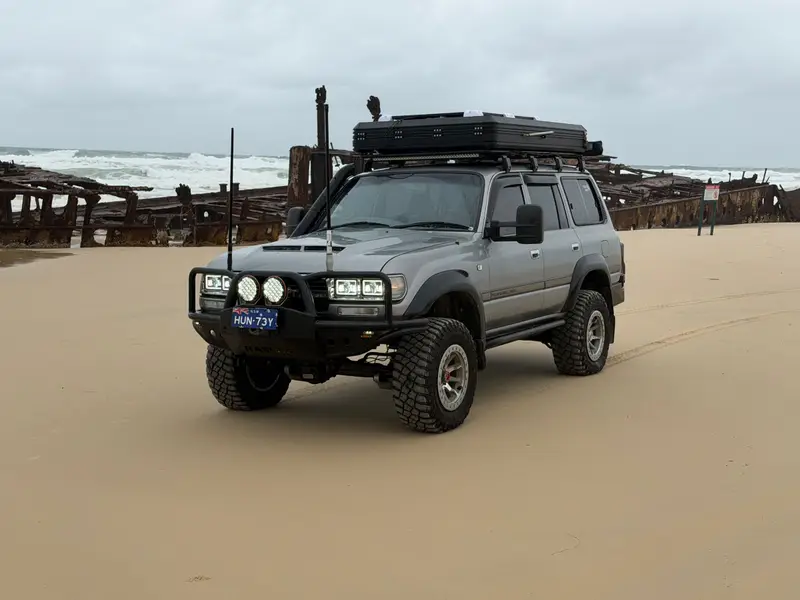
Access is by high-clearance 4WD with low-range gearing, or an off-road camper trailer. All Queensland road rules apply on the beach, vehicles must be registered and drivers licensed.
Reaching the island means a vehicle barge. From Inskip Point, near Rainbow Beach, the Mantaray barge takes 10 to 15 minutes to Hook Point on the southern tip, the start of the Eastern Beach scenic drive, and bookings are preferred. From River Heads, east of Maryborough, barges run at fixed times to Wanggoolba Creek (30 to 45 minutes) or Kingfisher Bay Resort (50 minutes to an hour), also with bookings preferred. Confirm timetables with the operators.
Once ashore, driving is governed by the tide. Queensland Parks says the Eastern Beach scenic drive that passes Dundubara is accessible only within two hours either side of low tide, and recommends travelling at or near low tide. It also says to travel the beach around Hook Point only at low tide and to use the Hook Point inland road instead where you can. Check Bureau of Meteorology tide predictions and allow for onshore winds.
What is the camping area like?
Dundubara is a fenced, formal camp. Queensland Parks strongly recommends that families with children under 14 camp in a fenced campground, and describes Dundubara’s dingo deterrent fence as suited to families with children 14 and under. The tent area permits up to 42 groups in large open areas, there are five marked camper trailer sites (book a trailer into a trailer site specifically, one trailer per site) and a large group site holds 20 to 40 people. Some capacity is reserved for commercial operators.
Check-in is at 14:00 and check-out at 11:00. A 9pm noise curfew applies, which suits early starts for tide-timed driving.
Does Dundubara have showers and toilets?
Yes. The operator lists these facilities:
- Flushing toilets
- Hot showers, coin-operated (carry coins)
- Water taps, with water that must be treated before drinking
- Picnic tables
- Communal fire rings
- Washing-up facilities
- Mobile coverage around the Dundubara office, a short walk from the camping area
A portable toilet waste disposal facility sits on the entrance track. Rubbish and recycling bins are at a waste transfer station on the beach, about 1 kilometre north of the entrance track, so rubbish needs a plan: bag it, seal it and carry it to the station rather than leaving it at your site.
Can you have a campfire at Dundubara?
Open fires are permitted only in the QPWS communal fire rings, and not at all when a QPWS fire prohibition or local fire ban is in force. Bring your own untreated milled timber or mill off-cuts: collecting firewood, including leaves and twigs for kindling, is illegal in the recreation area. A gas or fuel stove is the simpler option for cooking.
Is Dundubara dog friendly?
No. QPWS prohibits domestic animals in the K’gari (Fraser Island) section of Great Sandy National Park, and Wikipedia notes that domestic dogs are banned to protect the island’s dingoes. Queensland Parks also lists generators as not permitted at Dundubara, so leave yours at home.
What are the dingo safety rules?
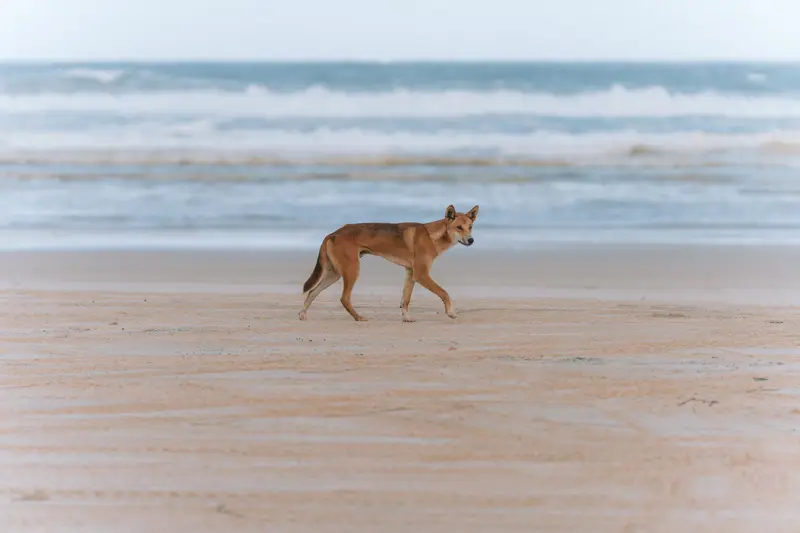
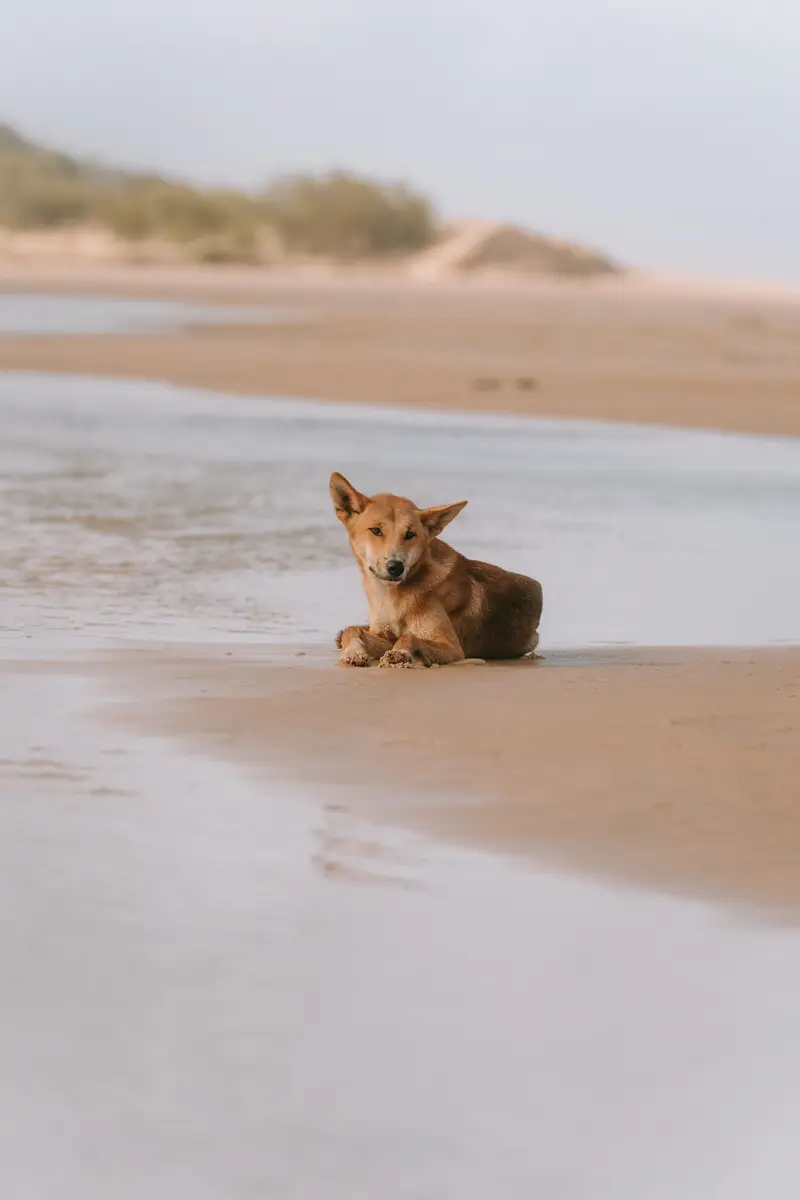
Dingoes (wongari) are wild animals, and the island’s population was estimated at 180 to 220 in 2015. QPWS says feeding or attracting wongari is an offence. Its Be Dingo-Safe guidance includes:
- Keep children within arm’s reach at all times, and never leave them unattended in tents, at beaches or lakes, or on walking tracks.
- Carry a dingo safety stick when walking outside fenced areas.
- Always walk rather than run, and walk in groups.
- Keep rubbish in a locked, airtight container or in your car, and lock up food, cooking, cleaning and fishing items.
- Do not bring food or have picnics on the lake shore or beach.
Queensland Parks says fines of up to $28,495 apply for disturbing or harming dingoes on K’gari.
What is there to do near Dundubara?
- Wun’gul Sandblow circuit. QPWS describes it as a half-day loop that leads up onto a sandblow.
- Lake Bowarrady walk. QPWS lists this as 22.4 kilometres return, with about eight hours of walking. The route runs through woodland and rainforest to a perched lake, and swimming is discouraged because the lake edges are fragile.
- Indian Head. About 19 kilometres north of the camp. James Cook named the headland in 1770 after seeing Aboriginal people gathered there. Allow for tides on the beach drive.
- Eli Creek, Champagne Pools and the Maheno wreck. These are on the east coast beach. Eli Creek is the island’s largest east-coast freshwater creek, with a flow of about 80 million litres a day. The SS Maheno was beached in July 1935 after its tow line parted in a cyclone, and climbing on it is not permitted because of the danger.
Lake McKenzie, a perched lake about 100 metres above sea level, and Lake Wabby, the deepest at 12 metres, are also on the island.
When is the best time to camp at Dundubara?
No weather station sits at the camp. The nearest Bureau of Meteorology figures on Wikipedia are from Sandy Cape Lighthouse at the island’s northern tip, so use them as a guide only. Mean daily maximums range from about 21.8 degrees Celsius in July to 29.8 in January and February. Mean minimums fall to 14.7 in July. Rainfall peaks in January and February and is lowest in September.
| Months | Mean max | Mean min | Rainfall |
|---|---|---|---|
| Dec to Feb | 29.1 to 29.8 | 21.9 to 22.8 | Wettest, up to 172 mm in February |
| Mar to May | 24.4 to 28.9 | 17.9 to 22.0 | Easing from 153 mm to 115 mm |
| Jun to Aug | 21.8 to 22.8 | 14.7 to 15.8 | Drier, 63 to 110 mm |
| Sep to Nov | 24.9 to 27.8 | 17.5 to 20.6 | Driest in September at 38 mm |
September and October combine mild temperatures with the lowest rainfall, and winter is cool but dry. Summer brings the heaviest rain, and peak school holidays are the hardest to book.
What should you bring?
- Your vehicle access permit, displayed before you leave the mainland, and your camping booking number
- Coins for the showers
- Water containers, and a way to treat tap water before drinking
- Clean, untreated milled timber or fuel if you plan to use a fire ring
- Sealed containers and bags for food and rubbish, plus an icebox you can secure
- A walking stick for walks, as QPWS advises for dingo safety
- Tide times and offline maps, since mobile coverage is only listed around the Dundubara office
- Recovery gear suited to soft sand, as sand driving is part of the trip
What supplies and services are nearby?
Dundubara has an office with mobile coverage nearby, and QPWS ranger stations provide first aid. Eurong, on the island’s east coast, has a police station, and Eurong Beach Resort’s general store sells snacks and grocery essentials, with a bakery on site. Call 000 in an emergency. Fuel availability on the island was not confirmed in the sources used here, so check with island operators and plan your fuel before leaving the mainland.
What is a one-night plan?
Aim to arrive after the 14:00 check-in with the tide in your favour, pitch camp, and walk to the beach before dusk. Cook on a gas or fuel stove, keep food secured, and respect the 9pm curfew. In the morning pack out by 11:00 and take your rubbish to the beach transfer station.
What is a weekend plan?
Two nights lets you do a proper loop. Use the morning of day two for the Wun’gul Sandblow circuit, then the beach in the afternoon, timed to the tide. A trip to Indian Head, 19 kilometres north, fits that day if the tide allows. Leave on the third morning after the 11:00 check-out.
Who does Dundubara suit, and who should choose elsewhere?
It suits campers with a high-clearance 4WD or off-road camper trailer, families who want a fenced camp, and anyone who wants flush toilets and hot showers on K’gari. It is not for people with dogs or anyone without a 4WD.
For alternatives, Queensland Parks also lists fenced camping areas at Wongai, Cornwells, One Tree and Eli, and Kingfisher Bay Resort has its own boundary arrangements for vehicle permits. Check each operator for current details.
Planning checklist
- Buy the vehicle access permit and camping permit before you travel
- Check the K’gari conditions report and park alerts, as closures and burns change
- Check tide times and plan your beach driving around them
- Confirm barge timing and fees
- Fill water containers and pack fuel and food
- Pack dingo-safe food storage and sealed rubbish bags
- Tell someone your plan, given the lack of coverage
Common mistakes
- Arriving without a permit. Permits cannot be bought from rangers on the island.
- Entering a wrong number plate on the vehicle access permit.
- Driving the beach away from low tide. Queensland Parks says the Eastern Beach scenic drive is only accessible within two hours either side of low tide.
- Leaving food, iceboxes or rubbish out. Dingoes are the reason for the rules, and feeding or attracting them is an offence.
- Bringing a dog. Domestic animals are prohibited in this part of the national park.
- Assuming open fires are allowed anywhere. Fires are limited to the fire rings and need clean, untreated milled timber or fuel.
More from the operator: book.parks.qld.gov.au/dundubara-camping-area.
Plan it in the app
Save the camp on your route in MotoRidez and the planner shows road closures along the way, and where your tank runs out once you have entered the range of your vehicle. Save the route for offline use before you lose signal: it saves the corridor around your route, not a whole region.
Details come from the operator’s own records and pages, read on 20 October 2026, and change. We do not show prices or availability. Confirm fees, bookings, closures and fire rules with the operator before you go.
Questions riders ask
Can you camp at Dundubara on K'gari?
Yes, in the Queensland-run fenced camping area, with a camping permit bought before you set up. Each vehicle also needs a vehicle access permit.
Do you need to book Dundubara camping area?
Yes. Queensland Parks says bookings can be made up to 12 months ahead, strongly advises booking for school and public holidays, and says permits cannot be purchased from rangers on the island.
How much does Dundubara camping cost?
Fees apply to the camping permit and the vehicle access permit and change over time, so check the Queensland National Parks booking site. Hot showers are coin-operated, so bring $2 coins.
Does Dundubara have showers and toilets?
Yes. The camp has flush toilets, coin-operated hot showers, water taps (treat the water before drinking), picnic tables and washing-up facilities. Rubbish bins are at a waste transfer station on the beach about 1 kilometre north of the entrance track.
Can you have a campfire at Dundubara?
Only in the QPWS communal fire rings, and never during a fire prohibition or local fire ban. Bring untreated milled timber or mill off-cuts, because collecting firewood is illegal.
Is Dundubara dog friendly, and are generators allowed?
No to both. Domestic animals are not allowed in national parks, and Queensland Parks lists generators as not permitted at Dundubara.
When can you drive to Dundubara on K'gari's beach?
Queensland Parks says the Eastern Beach scenic drive is accessible only within two hours either side of low tide, and the beach around Hook Point should be driven only at low tide.
Free, no subscription
Plan the curvy bits. Record the ride.
Watch your
map fill in.
Curvy routing, turn-by-turn voice navigation, ride recording and your ridden-roads map, with nothing behind a paywall.



Join the waitlist
Bring MotoRidez to your roads
The more riders register from your region, the sooner we get there. Put your name down, then send it to your ride group to move your region up the queue.
You're on the list ✓
Nice — you're in the queue
Every rider you bring moves your region up the list. Share it with your mates and your ride groups.