
The Southern Cross Lap: 14,791 km around Australia
The Big Lap is one continuous sealed road around a continent. We planned it corner to corner — here is what it measures, what it costs you in time, and where it stops being a drive and starts being the ride of your life.
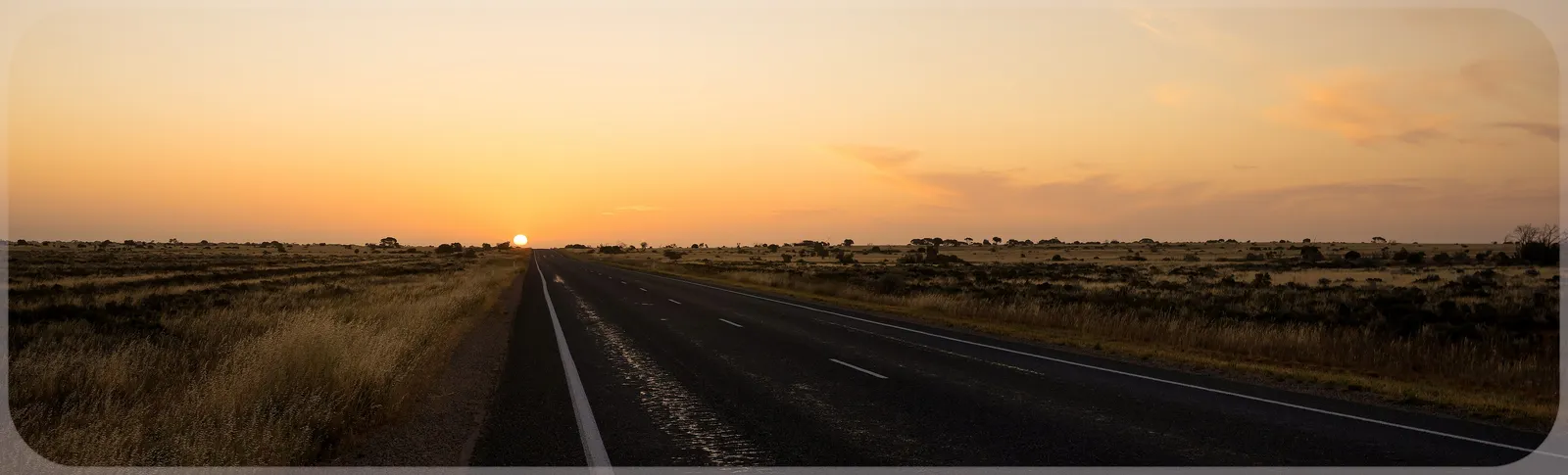
There is a road that goes all the way around Australia.
Not a route someone stitched together out of goat tracks and good intentions — an actual, continuous, sealed public highway that leaves your town, crosses a desert, runs along the top of some of the highest sea cliffs on earth, passes through rainforest and cattle country and a place where the road is dead straight for 146.6 kilometres, and then delivers you back to your own driveway.
It has a name already. Everyone calls it the Big Lap. We call our version of it the Southern Cross Lap, because a lap implies you came back, and because the thing that makes it extraordinary is not any single stretch of it. It is that the whole thing closes.
Most people who ride it are not doing anything exotic. They are riding an ordinary bike, on ordinary roads, one ordinary day at a time, for a very long time.
What the lap actually measures
We planned it properly — the whole loop, corner by corner, through the coastal line riders actually want rather than the fastest way between capitals. Here is what came back.
Those 167 hours are the honest number and also the most misleading one on this page. It is engine-running time. It does not include the morning you cannot leave Broome, the afternoon you lose to a tyre in Ceduna, the three days you were going to spend at Karijini that became nine, or the fact that nobody sensibly rides more than about six hours a day for weeks on end.
Divide 14,791 km by a genuinely sustainable 350 km a day and you get 43 riding days. Add rest days, weather and the places that will not let you leave, and you are looking at six weeks minimum, three months comfortable, and a year if you are honest with yourself about how good it is.
There is no start line
This is the part people get wrong about the lap, and it is the best thing about it.
A loop has no beginning. If you live in Sydney, the lap starts in Sydney. If you live in Perth, the lap starts in Perth — and it is exactly the same road, exactly the same length, just entered at a different point on the ring. You ride until you arrive back at your own front door.
Five capitals sit directly on the line: Sydney, Melbourne, Brisbane, Perth and Adelaide. So do Newcastle, Wollongong, Geelong and Cairns. For most Australian riders, the ride around the continent begins at the end of their street.
| Where you live | Distance to the lap |
|---|---|
| Sydney, Melbourne, Brisbane, Perth, Adelaide, Newcastle, Cairns | On it |
| Geelong, Wollongong | ~1 km |
| Ballarat | 73 km |
| Canberra, Toowoomba | ~106 km |
| Bendigo | 128 km |
| Kalgoorlie | 157 km |
| Dubbo | 277 km |
| Alice Springs | 542 km |
If you are in that last group the lap is still yours, you just get a genuine multi-day run to reach it — which, for Alice Springs, is one of the great rides in the country in its own right.
Melbourne to Adelaide: the warm-up that isn’t
The lap’s south-eastern corner opens with the Great Ocean Road, which is the single most photographed stretch of tarmac in Australia and, annoyingly for anyone who wants to be contrarian about it, completely deserves it.
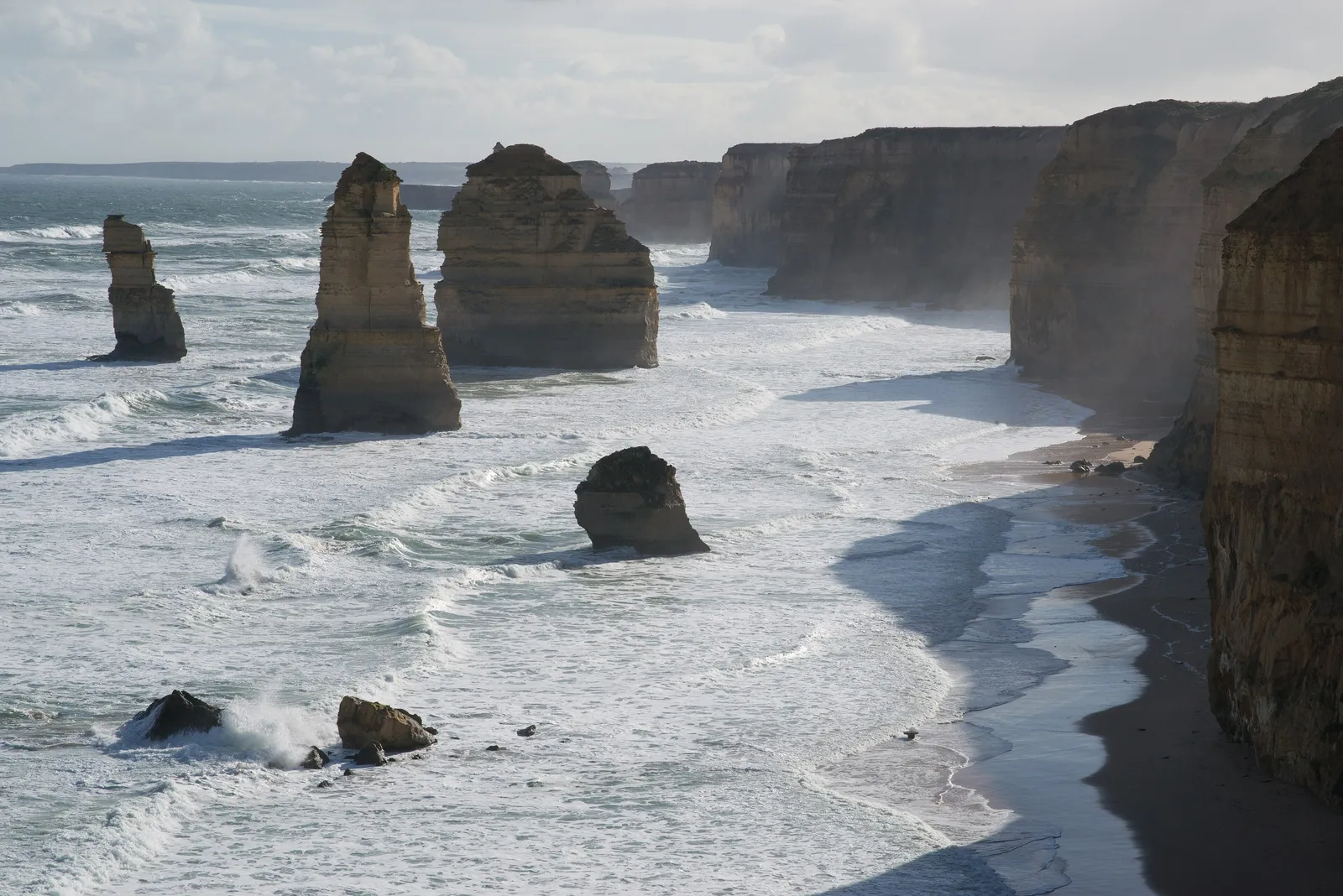

From Torquay the road spends 240 km pinned between the Southern Ocean and the Otway Ranges, and it is genuinely good riding — tight, cambered, relentless, with the sea directly below your left peg. Then it turns inland through the Otways, comes back out at the Twelve Apostles, and runs west through Port Fairy and across the border into the limestone country around Mount Gambier.
It is 957 km from Melbourne to Adelaide down the coast. You could do it in a day. Everyone who tries regrets it.
Adelaide to Perth: the crossing
Then the lap does something no other road trip on earth does quite this way. It empties out.
.jpg)
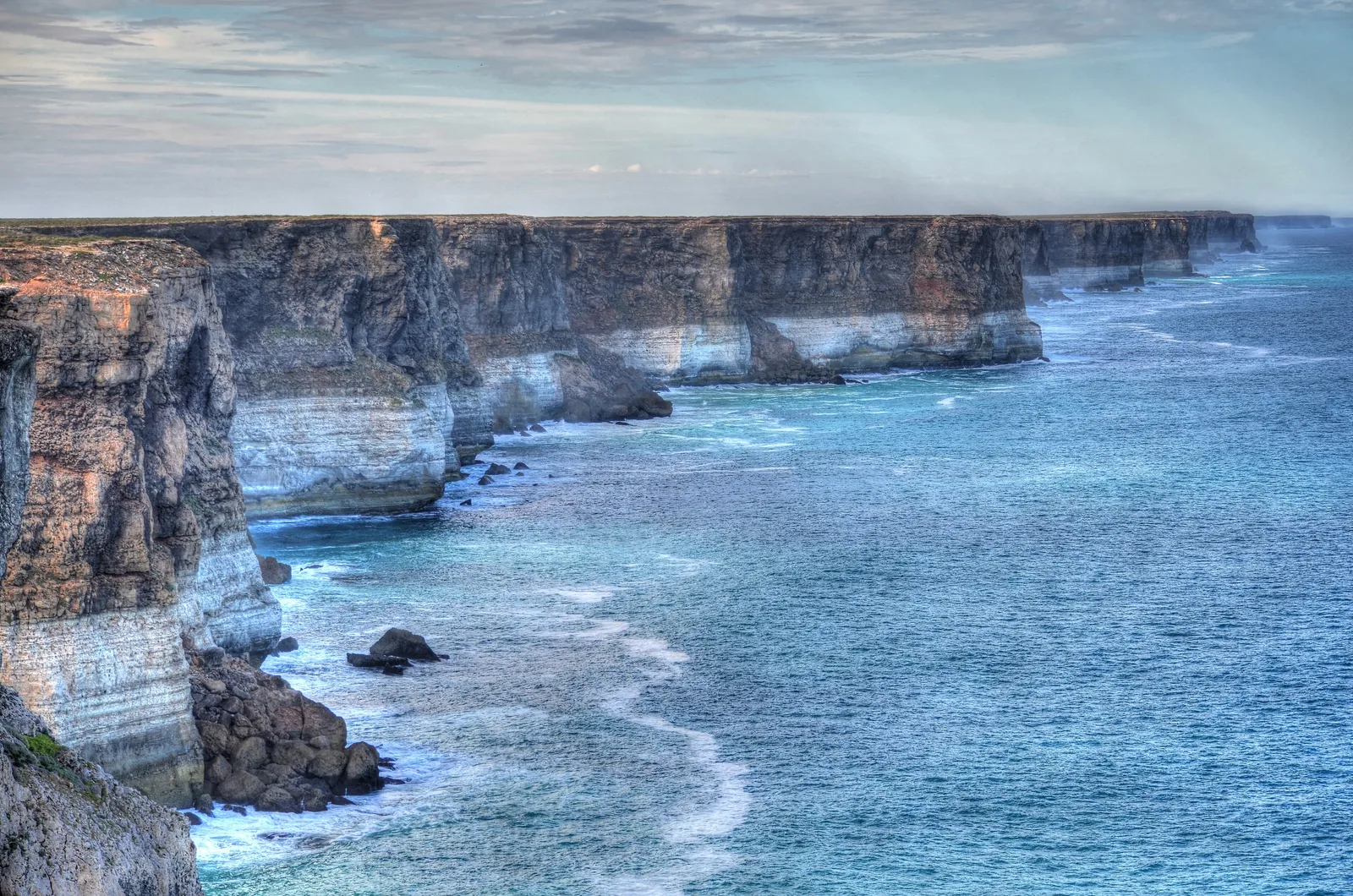
The Eyre Highway crosses the Nullarbor — from nullus arbor, no trees, which is both the name and the entire weather report. It is 3,068 km from Adelaide to Perth and for a large part of it the only structures are roadhouses spaced at the limit of a normal fuel range.
Somewhere past Balladonia the road stops pretending and goes perfectly, absurdly straight.
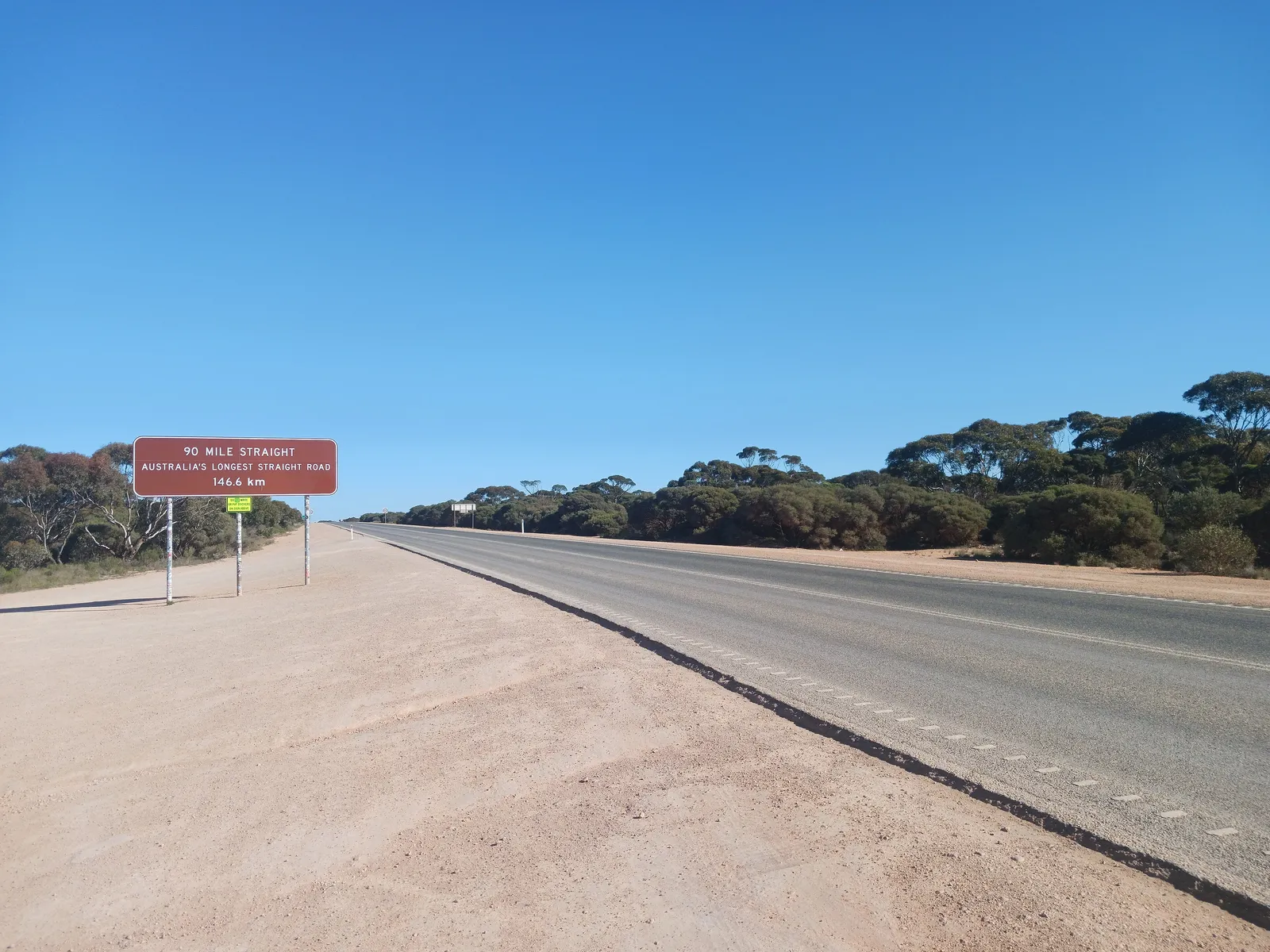

Riders talk about the Nullarbor as the bit to endure. That is not how it lands. It is the section people describe afterwards in a different voice — the one where the wind noise is the only thing happening, the horizon does not change for four hours, and you come out the other side having thought about things you had been putting off.
Fuel is the only real discipline here. Roadhouse to roadhouse, plan for 80% of your true range, and treat every pump as a waypoint rather than a hope. Our fuel range guide is written mostly for exactly this stretch.
Perth to Broome: the Coral Coast and the Pilbara
North out of Perth the lap turns into red country. Kalbarri’s river gorges, the Ningaloo reef where the road runs within sight of water you can swim in straight off the beach, then the Pilbara — iron ore, road trains with four trailers, and Karijini’s gorges cut into rock two billion years old.
It is 2,367 km Perth to Broome, and it is the emptiest riding of the entire lap after the Nullarbor. Towns are a tank apart. Phone signal is a rumour.
Broome to Darwin: the Kimberley
.jpg)
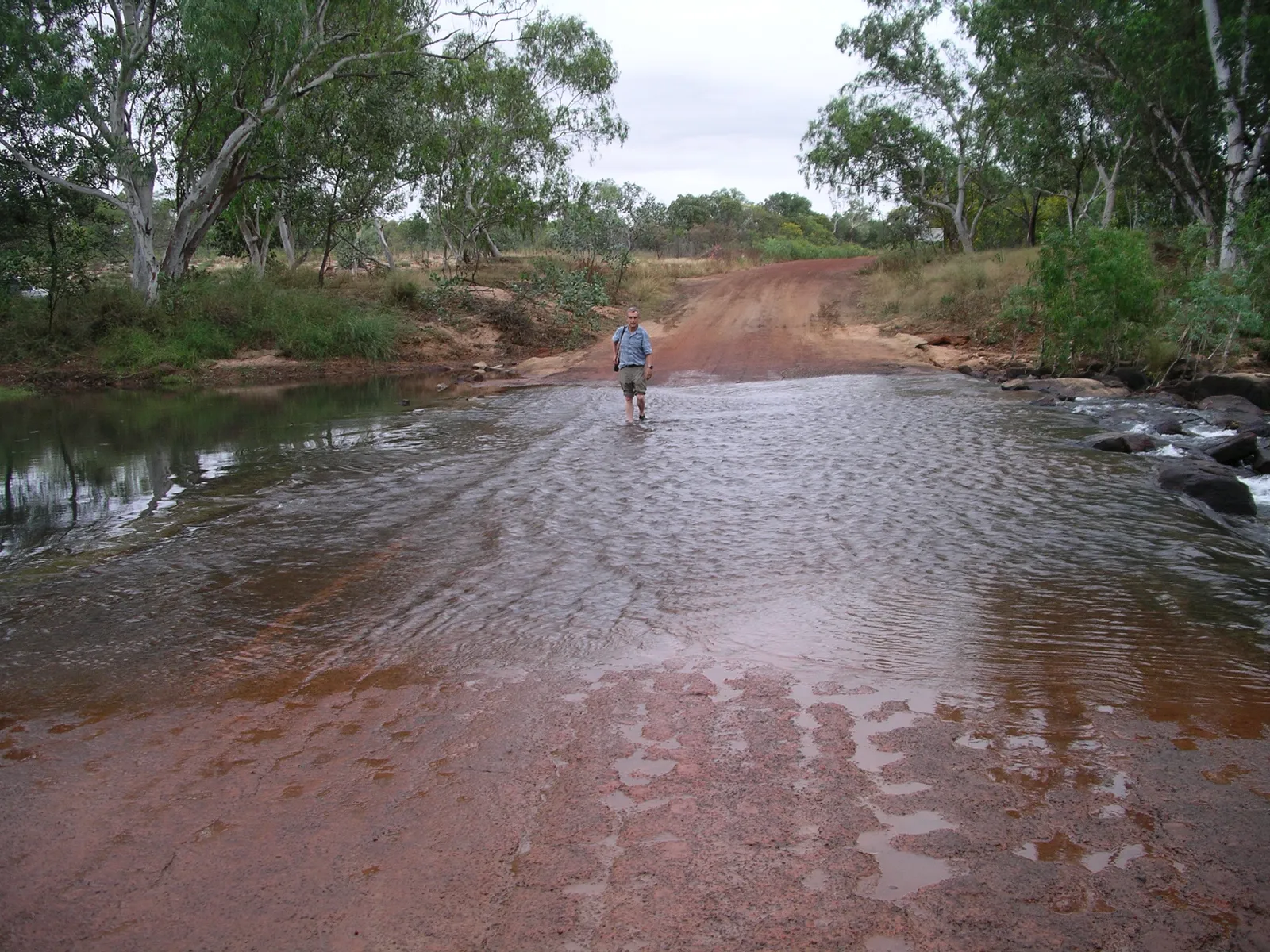
The Kimberley is the part of the lap that most changes people’s plans. The sealed line runs Broome–Derby–Halls Creek–Kununurra, 1,878 km to Darwin, past the turn-offs for Purnululu’s beehive domes and Windjana Gorge and the Gibb River Road itself.
The Gibb is unsealed, and whether it is on or off your list is the single biggest fork in the whole trip. It is not part of the lap as measured here. It is 660 km of dirt, corrugation and river crossings, and every year it eats the holiday of somebody who underestimated it. It is also, by consensus, one of the greatest rides in the world.
Season is not optional here. The wet runs roughly November to April. Roads flood, gorges close, and the heat is genuinely dangerous. Ride the north between May and September or plan the lap so you are somewhere else.
Darwin to Cairns: down the middle and back out
_Gorge.jpg)
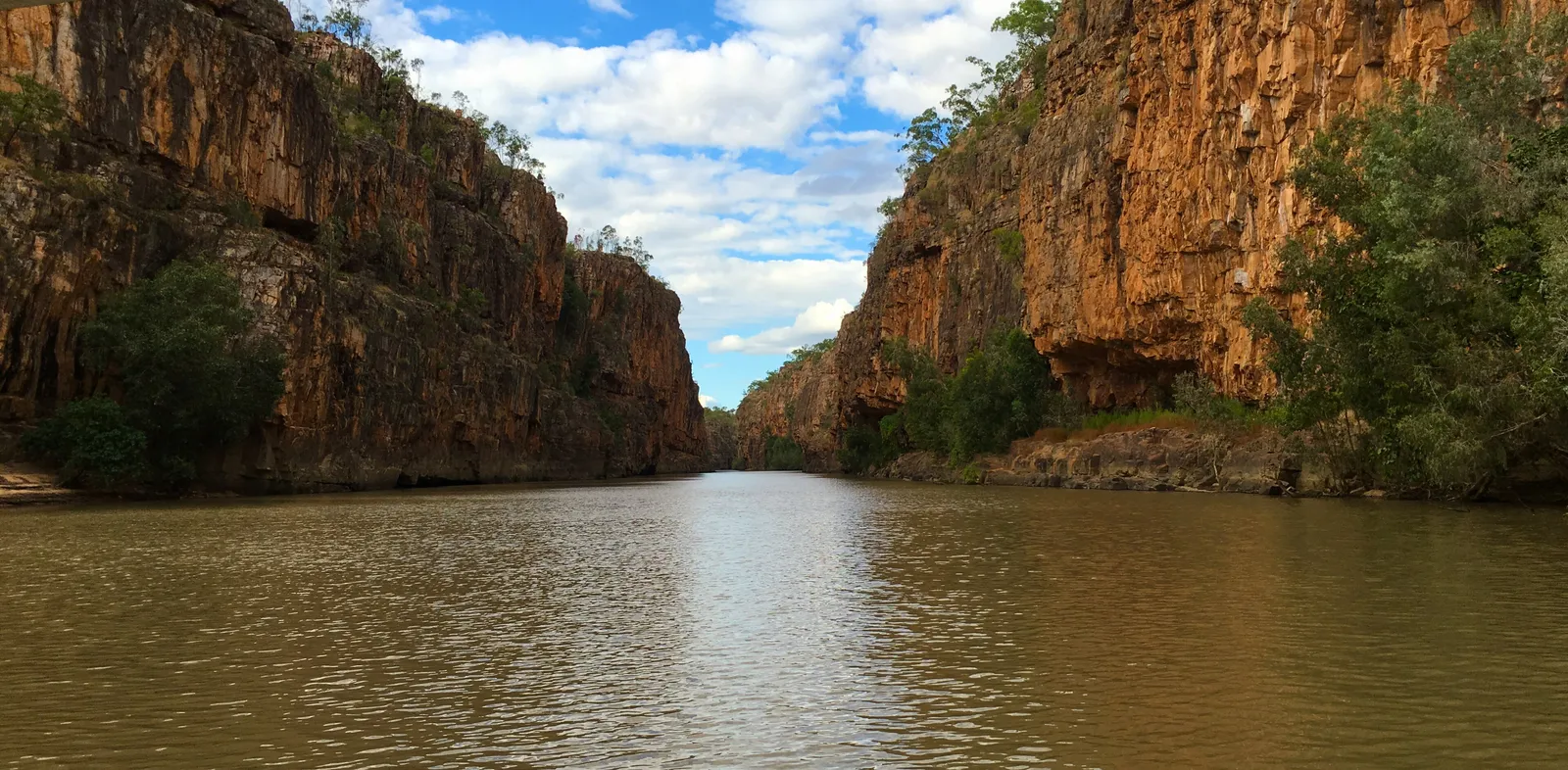
Here the lap does the one thing that surprises people: it leaves the coast. There is no sealed road around the Gulf of Carpentaria, so Highway 1 cuts inland through Katherine, down the Stuart, east along the Barkly and across to Townsville — 2,866 km of cattle station, escarpment and very long horizons.
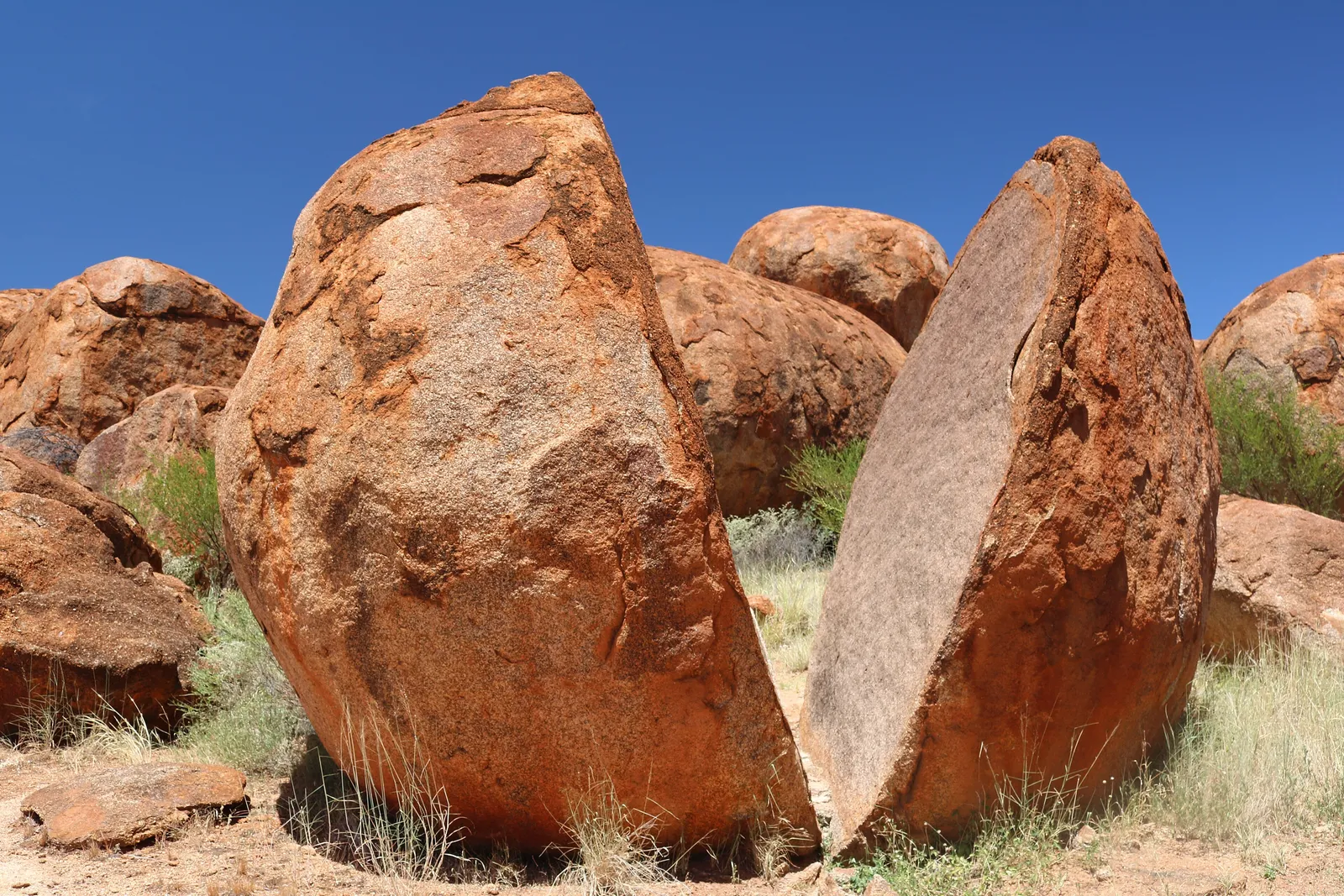

This is road train country. They run to 53.5 metres and four trailers, they do not slow down, and the turbulence as one passes will move you across your lane. Give them room, overtake only with a very long view, and pull well off the seal when you stop.
Cairns to Sydney: the long coast home
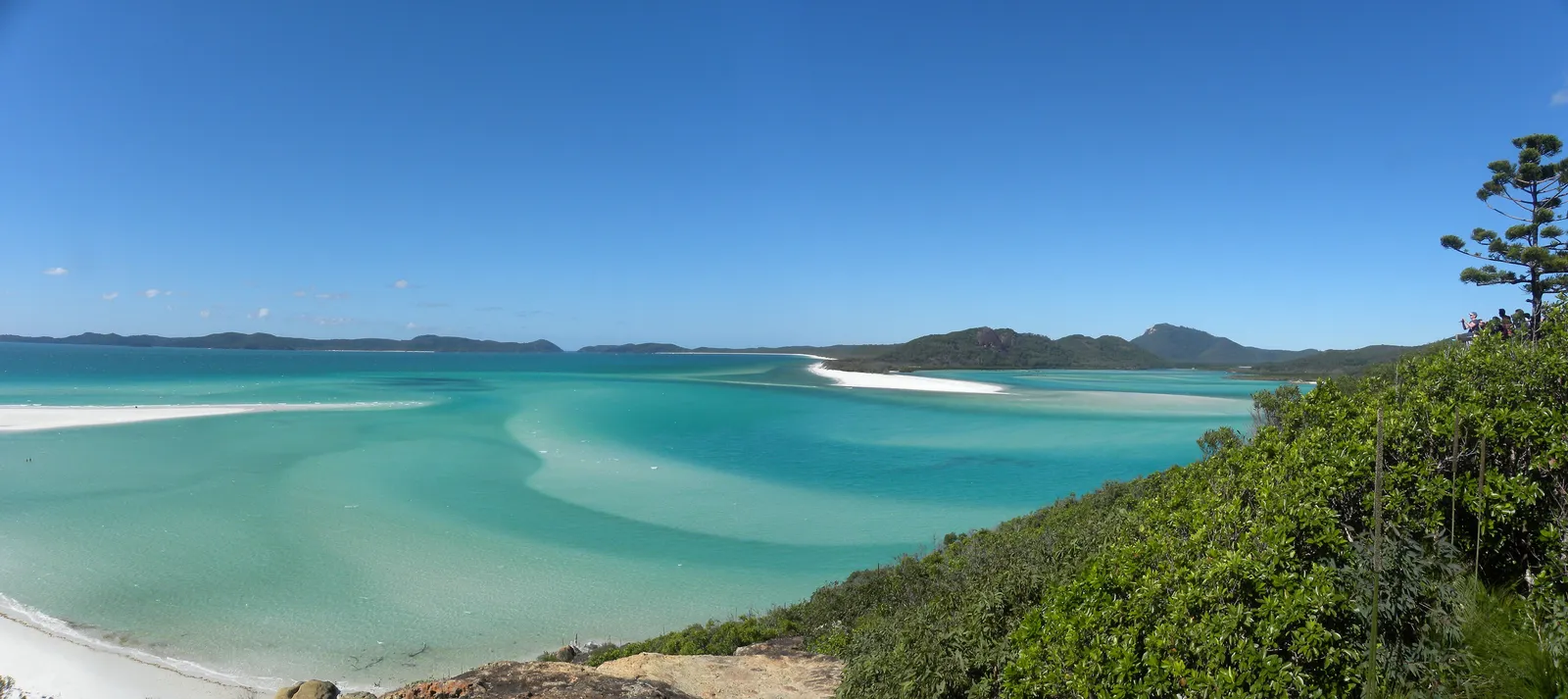

The east coast is the busiest, greenest and easiest quarter of the lap, and after the Barkly it feels like the volume has been turned up. Daintree rainforest, the reef towns, the Sunshine Coast hinterland, then the run down through northern New South Wales.
South of Sydney the lap saves something good for last: the Grand Pacific Drive down the Illawarra escarpment, then the Sapphire Coast through Batemans Bay and Eden, and finally the run west through Gippsland into Melbourne. If you started in Melbourne, this is the day the loop closes.
The ones that are not the lap
The Southern Cross Lap is the outer ring. Four other rides sit inside or beside it, and each is a serious trip in its own right — we measured these the same way:
| Ride | Distance | Shape |
|---|---|---|
| Tasmania ring | 1,182 km | A closed loop from Devonport |
| Red Centre loop | 1,524 km | Alice Springs, Kings Canyon, Uluru, back |
| Explorers Way | 3,054 km | Adelaide to Darwin, straight up the middle |
| Savannah Way | 3,651 km | Cairns to Broome across the top |
Tasmania is the one people ask about most, and it is not part of the mainland lap for a boring reason: Bass Strait. It needs the ferry, so the continuous road loop cannot include it. Treat it as its own trip.
The Explorers Way and the Savannah Way are the two great shortcuts — each turns the lap into a figure-of-eight and cuts weeks out of it, at the cost of the coast.
What it actually takes
Not much, is the honest answer, and that is the point.
A bike you already own. Every kilometre described here is sealed. The lap has been ridden on postie bikes. Fuel range, replaceable tyres and a seat you can live with matter more than displacement.
Fuel discipline. Two or three stretches will test your range. Plan to refuel at 80% and never gamble on a single-pump town keeping the hours you assumed.
The right season, in the right direction. Decide when you will be in the north first, then work the direction backwards from that. This is the only planning decision that can genuinely ruin the trip.
Ride it in pieces
Here is the thing nobody tells you about the Big Lap: you do not have to do it in one go.
It is a closed loop of public road. You can ride the Great Ocean Road quarter over a long weekend, come back three years later and do the Nullarbor, and take the Kimberley the winter after that. The line does not care. Every section you ride is a section of the lap, and one day the ring closes.
Most people who complete it never set out to. They just kept riding bits of it until there were no bits left.
The whole ring, and the eight stages it breaks into:
| Stage | Where it goes | Distance |
|---|---|---|
| Melbourne → Adelaide | the Great Ocean Road | 957 km |
| Adelaide → Perth | the Nullarbor | 3,068 km |
| Perth → Broome | the Coral Coast and the Pilbara | 2,367 km |
| Broome → Darwin | the Kimberley | 1,878 km |
| Darwin → Cairns | the Top End and the Barkly | 2,866 km |
| Cairns → Brisbane | the reef coast | 1,701 km |
| Brisbane → Sydney | the Pacific coast | 923 km |
| Sydney → Melbourne | the Sapphire Coast | 1,031 km |
Questions riders ask
How long is the Big Lap of Australia?
About 14,500 km if you take the shortest sealed line around the continent. Planning it through the coastal route most riders actually want — the Great Ocean Road, the Bunda Cliffs, the Coral Coast, the reef coast — brings it to 14,791 km across eight stages. Almost everyone adds another 1,000 km in detours they did not plan.
How long does it take to ride around Australia?
Six weeks is the fast end and it is genuinely hard riding — around 350 km every single day with no rest days and no weather. Three months is comfortable. Six to twelve months is what most people who set off with no return date end up taking. The pure riding time is about 167 hours, which sounds manageable until you divide it by how far you actually want to ride in a day.
Where do you start the Big Lap?
Wherever you live. It is a closed loop with no beginning, so the nearest point on the line to your front door is your start line and your finish line. Sydney, Melbourne, Brisbane, Perth, Adelaide, Newcastle and Cairns all sit directly on it. Canberra is about 106 km away, Ballarat 73 km, Toowoomba 106 km.
Which direction should you ride around Australia?
Season decides it, not preference. The northern half — the Kimberley, the Top End, the Gulf — is only sensible in the dry season, roughly May to September. Work out when you will reach the north, then choose the direction that puts you there in the dry. Clockwise from the south-east in autumn is the common answer.
Do you need a big adventure bike to do the Big Lap?
No. Every kilometre of the lap described here is sealed. People have ridden it on scooters, on 250s and on cruisers with no luggage rack. What matters far more than the bike is fuel range, tyres you can actually replace in a regional town, and a comfortable seat. The bike that is best for the lap is usually the one you already own.
Is Tasmania part of the Big Lap?
Not of the mainland lap — it needs the Spirit of Tasmania across Bass Strait, so the continuous road loop does not include it. Tasmania has its own ring, about 1,182 km, and a lot of riders treat it as a separate trip rather than a detour.
Free, no subscription
Plan the curvy bits. Record the ride.
Watch your
map fill in.
Motoridez is free on iOS and Android — curvy routing, turn-by-turn voice navigation, ride recording and your ridden-roads map, with nothing behind a paywall.


Not in Australia yet
Bring Motoridez to your roads
We've launched in Australia first. The more riders register from your region, the sooner we get there — so put your name down, then send it to your ride group to move your region up the queue.
You're on the list ✓
Nice — you're in the queue
Every rider you bring moves your region up the list. Share it with your mates and your ride groups.