
Freedom camping in New Zealand: rules, self-contained vehicles, fines
Freedom camping in New Zealand: where it is allowed, what self-contained means, how council rules and fines work, and DOC or holiday park alternatives.
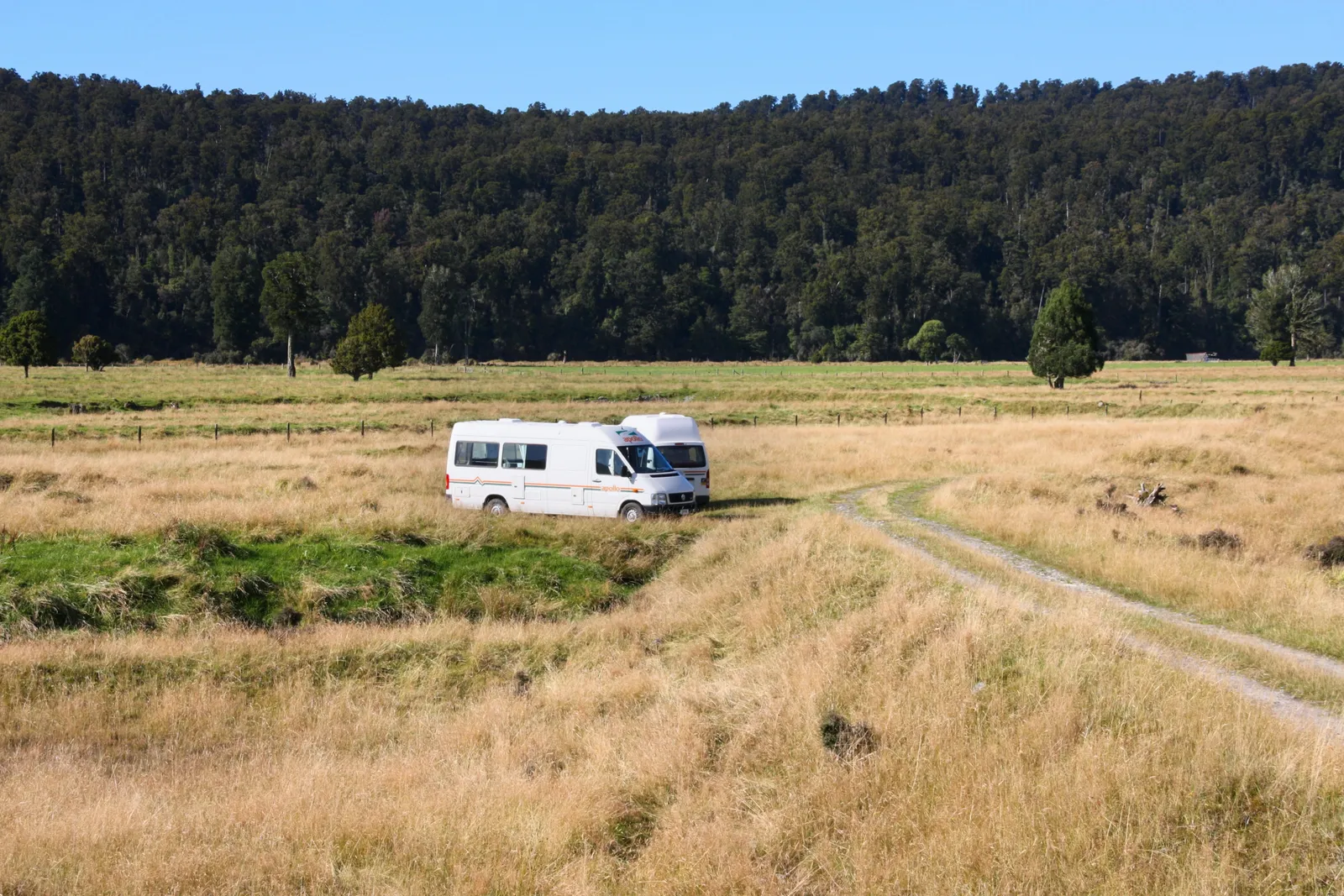
Freedom camping in New Zealand means camping outside a formal campground, on public land, without booking a site. The national law sets the framework, while councils and the Department of Conservation (DOC) decide the detail place by place. This guide explains who can freedom camp, what a self-contained vehicle now has to be, how the rules and fines work, and when a DOC campsite or holiday park is the better choice. Rules are set partly by councils, they change, and they must be checked locally before you park for the night.
What is freedom camping in New Zealand?
The Freedom Camping Act 2011 defines it as camping within 200 metres of a motor-vehicle-accessible area, within 200 metres of the sea or a harbour, or on or within 200 metres of a formed road or Great Walks track, and outside a designated campground. It covers campervans and cars, but also tents, bivouacs and other temporary structures. DOC notes this is a legal definition, not a guide to where you may camp.
The Act does not give anyone a right to camp anywhere. It lets councils and DOC manage camping on the land they control, and it makes breaking local rules an infringement offence. Private land needs the landowner’s permission, and Waitaki’s council notes that its map does not show private land.
Where can you freedom camp?
Where depends on who manages the land.
Public conservation land (DOC). DOC says you can freedom camp on public conservation land unless the site is prohibited or restricted. Prohibited areas are closed even to certified self-contained vehicles, usually for conservation reasons or past problems with campers. Restricted areas may be limited to self-contained vehicles, capped at a set number of nights, or hold only a few overnight spaces with the rest kept for day visitors. DOC publishes lists of both, and signs on site apply. Scenic and recreation reserves are a trap: under the Reserves Act 1977, camping there generally needs a campsite DOC provides or approves, and not every restricted area has a sign.
Council land. Councils make freedom camping bylaws for the parks, reserves, car parks and roadsides they own or manage. Many publish an online map showing permitted, restricted and prohibited areas, and those maps usually come with a disclaimer about accuracy.
DOC does not allow freedom camping with dogs in national parks, and other conservation land can have its own dog rules. Great Walks tracks are generally off limits for freedom camping nearby.
What does self-contained mean now?
For most freedom camping on council and DOC land, a vehicle has to be certified self-contained. The rules tightened recently, and older advice you may read online is out of date.
- From 7 June 2026, a vehicle needs a green warrant to count as certified self-contained. The old blue warrant is no longer recognised.
- The warrant card must be displayed when camping in self-contained-only areas.
- Portable toilets no longer qualify. The toilet has to be fixed to the vehicle floor.
- A certified vehicle also needs a water supply, a wastewater system, ventilation, a sink and rubbish storage.
- Certification comes from an approved Certification Authority, with the Plumbers, Gasfitters and Drainlayers Board as the lead regulator. The New Zealand Motor Caravan Association says certification lasts four years.
- The official Self-Contained Motor Vehicles Register lets you check a vehicle. If you are buying a van, check the register rather than trusting a sticker or the seller’s description.
A rented campervan sold as self-contained should carry the right warrant, but confirm the card is displayed and in date. A car, a tent or a van with a portable toilet does not meet the standard.
How do the rules differ between places?
The same night in the same vehicle can be legal in one district and fined in the next. Four councils show the range.
Queenstown Lakes (including Wanaka). This district has had some of the most contested rules in the country. Reporting from the Otago Daily Times says an older bylaw was quashed by the High Court after a judicial review brought by the Motor Caravan Association, and that a replacement allows self-contained vehicles at a limited number of designated sites with a short stay limit. Treat that as background only. Local news reports describe infringement notices being issued soon after rule changes. Read the council’s own page and map before you arrive.
Auckland. Auckland Council’s Freedom Camping in Vehicles Bylaw lets certified self-contained vehicles stay on much council-controlled land, including many roadsides, with conditions. The council’s guidance sets a stay limit in the same road or off-road parking area, a morning departure time and a gap before returning. It excludes a list of prohibited areas, reserves under the Reserves Act, regional parks and paid or reserved car parks, and a smaller list of restricted areas carries extra conditions. Vehicles that are not self-contained are not covered by the general rule.
Christchurch. The city’s Freedom Camping Bylaw was made in 2021. The council says tents and vehicles without facilities must use a camping ground, while a self-contained campervan may camp in some areas of Christchurch, Akaroa and Banks Peninsula. Camping is prohibited in council parks and reserves, apart from four council camping grounds. The council’s map has legend categories such as two nights in self-contained vehicles only, marks dump stations and public toilets, and notes that other agencies set their own rules, such as DOC at Godley Head.
Waitaki (Oamaru). The Waitaki District Responsible Freedom Camping Bylaw 2021 requires a self-contained vehicle and sets a stay limit across a four-week period. Many prohibited areas lie on the coast between Oamaru and Kakanui. The council offers an online map covering permitted and prohibited areas, campgrounds, dump stations and public toilets, and says it does not guarantee the map’s accuracy.
Stay limits, prohibited areas and wording differ between districts and are revised from time to time.
How do fines work?
Breaking freedom camping rules can lead to an infringement notice, commonly called an instant fine. Councils and DOC enforce the rules. Councils such as Waitaki describe an instant fine for camping without a self-contained vehicle where one is required. DOC says breaking its rules may lead to a fine and points to the Ministry of Business, Innovation and Employment (MBIE) infringement offences table for the full list and penalties. Councils add their own bylaw and parking enforcement on top.
Amounts and offences change, so this guide gives none. Check MBIE’s table and the council’s page for the district you are in.
What do DOC campsites offer instead?
DOC runs more than 320 campsites nationwide, in forest, lakeside and beach settings, and its site search lets you filter them. They are not freedom camping. They are designated campsites with a managed layout, and fees apply at many of them. DOC describes them as places to enjoy the outdoors while minimising your impact.
Third-party guides describe a grading from basic sites with a toilet and water through to serviced sites with showers, but sources disagree on the current categories, so use DOC’s own listing for the specific campsite. Booking varies too: some campsites take online bookings and many are first come first served. Check the page for the campsite you want, especially over summer holidays and long weekends.
How does freedom camping differ from holiday parks and DOC campsites?
| Freedom camping | DOC campsite | Holiday park | |
|---|---|---|---|
| Where | Permitted public land | Conservation land | Commercial, private sites |
| Vehicle | Usually certified self-contained | Tent, car or campervan | Tent, caravan, campervan, cabin |
| Facilities | Whatever your vehicle carries, plus public toilets and dump stations nearby | Varies from basic to serviced | Typically toilets, showers, kitchen, many with power |
| Booking | None, but limits apply | Some bookable, many first come first served | Usually booked |
| Rules | Council bylaw or DOC signs | DOC campsite rules | Park rules |
| Money | Infringement notices can apply for breaches | Fees apply at many | Fees apply |
Holiday parks sit at the comfortable end. Guides describe toilets, showers and a kitchen as the baseline, with powered sites and often cabins. Prices vary, so check the park’s own site.
Who suits what:
- Freedom camping: a certified self-contained campervan or motorhome and a willingness to check the local map and move on at the limit.
- DOC campsite: tents, cars and mixed groups who want a natural setting and can plan ahead for popular sites.
- Holiday park: anyone wanting showers, a kitchen or power, and any night you cannot confirm a legal freedom camping spot.
Motorbike and bicycle travellers carrying a tent are not self-contained, so on council land DOC campsites and holiday parks are the practical options.
Can you freedom camp in a tent or car?
Mostly not on council land. Christchurch says tents and vehicles without facilities must use a camping ground, Waitaki requires a self-contained vehicle, and Auckland’s general rule applies to certified self-contained vehicles. DOC land is more open on paper, but restrictions, prohibited areas and the reserve rules above still apply. If unsure, assume a campground is needed until a source for that exact place says otherwise.
What are the rules on toilets, rubbish and fires?
DOC requires you to manage all waste, including human waste, and not to light fires or damage plants and animals. Dump stations and public toilets are shown on several council maps, so plan where you will empty wastewater before you park. Obey every sign, because a No camping sign means no overnight camping within 200 metres of it, and a self-contained vehicles only sign means only certified vehicles may stay.
How do you check the rules before you stop?
Use these, in order.
- DOC’s prohibited and restricted conservation areas list, and its list of places restricted to self-contained vehicles, for conservation land.
- The relevant council’s freedom camping page and bylaw map. Search the council name plus “freedom camping”.
- The Self-Contained Motor Vehicles Register for the vehicle.
- MBIE’s freedom camping pages and infringement offences table for the national rules.
- Signs on site, which override your assumptions.
- Camping apps, useful for toilets and dump stations but not the law. Council maps carry their own accuracy disclaimers.
If the map and a sign disagree, contact the council.
When is the best time to freedom camp?
The rules, not the weather, drive the decision, so there is no season table here. Guides note that serviced DOC campsites book out well ahead over summer holidays and long weekends, so have a fallback arranged for those dates.
Planning checklist
- Confirm your vehicle is certified self-contained, with a green warrant displayed and a fixed toilet.
- Check the warrant is in date and the vehicle appears on the register.
- Read the council page and map for each district you will sleep in.
- Check DOC’s prohibited and restricted lists for conservation land.
- Note stay limits and departure times for each night.
- Find dump stations, public toilets and rubbish bins along the route.
- Carry water and know your wastewater capacity.
- Book a holiday park or DOC campsite as a fallback for busy nights.
- Leave dogs out of any national park freedom camping plan.
Common mistakes
- Relying on an old blue warrant or a portable toilet.
- Assuming a rule from one district applies in the next.
- Assuming an app is the law.
- Camping in a reserve because there was no sign.
- Staying past a limit because the spot was quiet.
- Leaving rubbish or wastewater behind.
- Arriving late with no fallback.
More from the operator: doc.govt.nz/freedomcamping.
Plan it in the app
Save the camp on your route in MotoRidez and the planner shows road closures along the way, and where your tank runs out once you have entered the range of your vehicle. Save the route for offline use before you lose signal: it saves the corridor around your route, not a whole region.
Details come from the operator’s own records and pages, read on 20 October 2026, and change. We do not show prices or availability. Confirm fees, bookings, closures and fire rules with the operator before you go.
Questions riders ask
Is freedom camping legal in New Zealand?
Yes, under the Freedom Camping Act 2011, but only where councils and DOC allow it. Prohibited and restricted areas, signs and local bylaws apply.
What is a self-contained vehicle in NZ?
A vehicle certified with a green warrant, with a fixed toilet plus water supply, wastewater, ventilation, sink and rubbish storage. Certification lasts four years and can be checked on the official register.
Can you freedom camp in a tent or a car?
Often not on council land. Christchurch, for example, says tents and vehicles without facilities must use a camping ground, so check the council for each district.
How much is a freedom camping fine?
Infringement notices can apply for breaching the rules, and amounts change. Check the MBIE infringement offences table and the local council page.
Can you freedom camp with a dog?
Not in national parks. Other conservation land and council areas have their own dog rules, so check DOC or the council.
How is freedom camping different from a DOC campsite?
A DOC campsite is a designated, managed site that DOC runs, and fees apply at many. Freedom camping is outside designated campgrounds on land where it is permitted.
Where do I check the rules?
DOC's prohibited and restricted areas lists for conservation land, the relevant council's freedom camping page and map, and MBIE for national rules.
Free, no subscription
Plan the curvy bits. Record the ride.
Watch your
map fill in.
Curvy routing, turn-by-turn voice navigation, ride recording and your ridden-roads map, with nothing behind a paywall.



Join the waitlist
Bring MotoRidez to your roads
The more riders register from your region, the sooner we get there. Put your name down, then send it to your ride group to move your region up the queue.
You're on the list ✓
Nice — you're in the queue
Every rider you bring moves your region up the list. Share it with your mates and your ride groups.